Airline crews use checklists not because they forget things but because everyone forgets things when tired, rushed or distracted. The principle transfers to unmanned operations without modification.
Before leaving
Aircraft. Intact, propellers undamaged, fasteners tight.
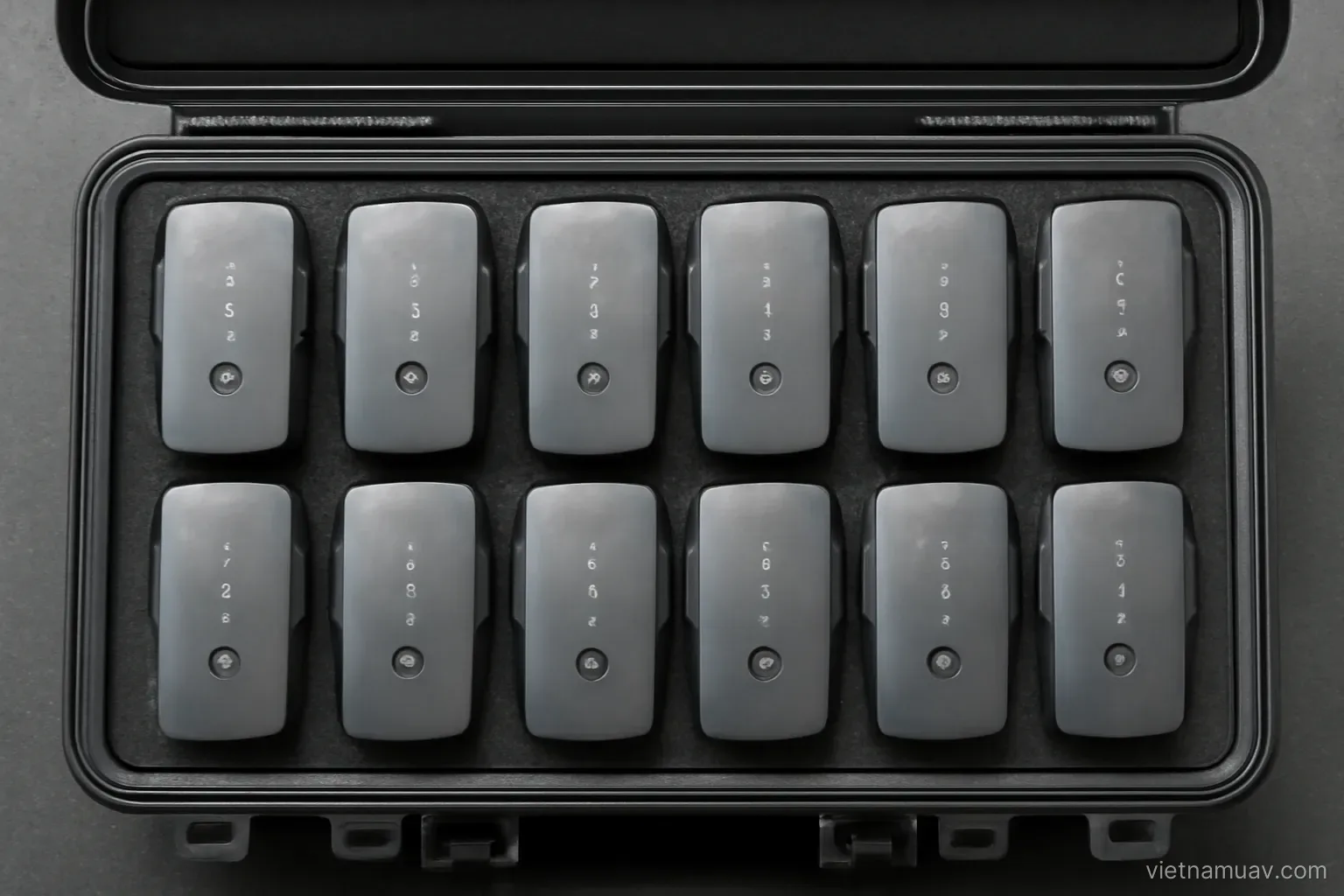
Batteries. Correct number, all charged, none swollen.
Controller. Charged.
Memory cards. Fitted, formatted, sufficient capacity.
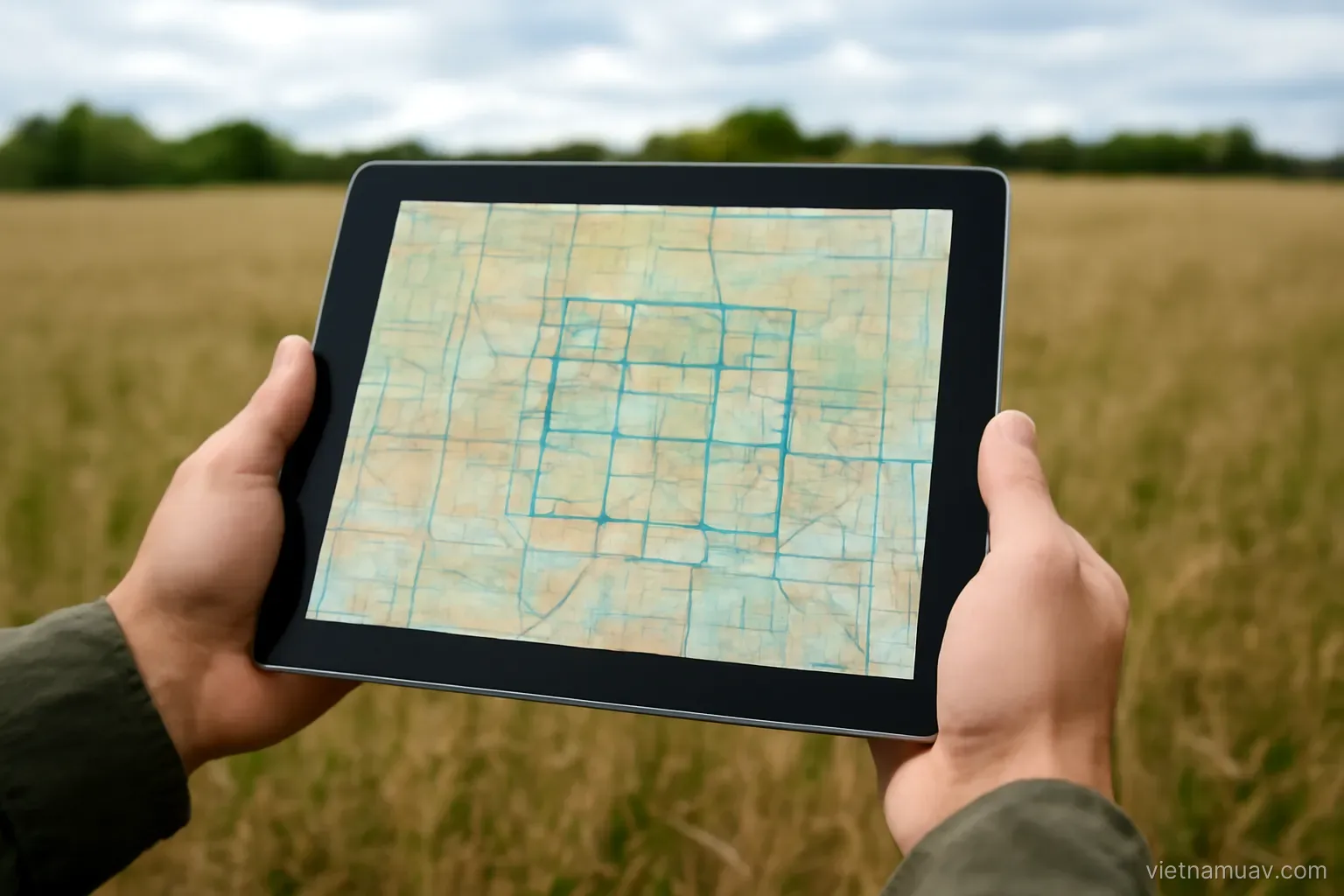
Display device. Charged, with offline maps for the area downloaded.
Software. Updated in advance. Updating on site wastes time and may need connectivity you do not have.
Documentation. Permissions, credentials, contract.
Accessories. Spare propellers, tools, chargers, cables, landing mat.
Personal items. Water, sun protection, waterproofs, torch. A day in an open field is longer than it sounds.
Confirm the site details. Access arrangements, who to meet, whether a gate will be open. A confirmed contact avoids arriving to a locked track.
Check the aircraft firmware matches the controller. A mismatch after an update refuses to connect, and discovering that in a field with no signal is a wasted day.
Work from a printed list. A single missing small item can waste an entire journey.
On site before launch
The area. People, animals, vehicles, obstacles, and above all power lines.
Airspace. Look and listen for crewed aircraft.
Local weather. Wind, cloud, any sign of rain.
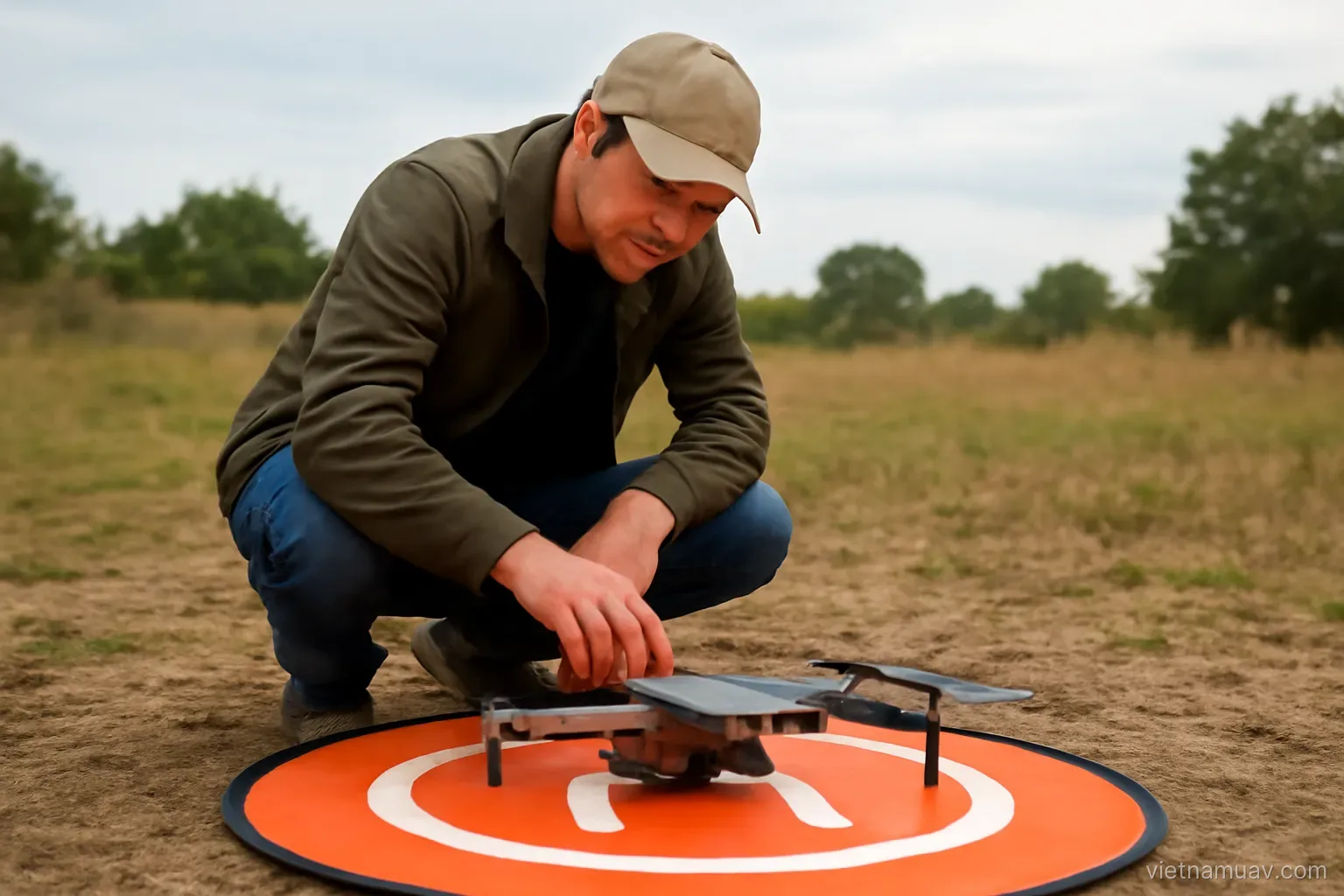
Launch point. Level, clean, large enough, with nothing that will be blown about.
Aircraft. Propellers correctly fitted and secure, landing gear deployed, lens cap removed.
Battery. Seated firmly, voltage confirmed.
Link. Controller and aircraft paired, signal good.
Calibration. Compass if the location is new or the aircraft requests it.
Settings. Return altitude, link-loss behaviour, altitude and distance limits.
Brief the crew. What the plan is, who does what, what the signal to stop is. Two minutes, and it aligns assumptions that would otherwise differ.
Agree the abort landing spot. Where the aircraft goes if it has to come down immediately. Deciding that in advance turns a scramble into a routine action.
Home point. Confirmed, with sufficient satellites acquired before launch.
Immediately after launch
Hover low for a few seconds. Before departing. This step catches a surprising number of problems.
Listen. Unusual noise or vibration.
Position hold. Does the aircraft drift with no input.
Control response. Small inputs in each direction, confirming correct reaction.
Imagery. Camera working, focused, nothing obstructing the lens.
Telemetry. Satellite count, signal strength, battery level, no warnings.
Climb to working altitude and assess wind. Tilt angle and current draw tell you whether conditions are as expected.
Any anomaly means landing. Continuing with an unexplained symptom is how aircraft are lost.
Confirm the first images. Rather than assuming capture started correctly, verify it on the display before the aircraft is far away.
After landing
Do not leave immediately. Verify the data first.
Image count. Against plan.
Image quality. Several examined at full magnification — sharp, correctly exposed, covering the intended ground.
Geotags. Present on every image.
Coverage. Complete including boundaries.
Back up. To at least one other device before leaving site.
Aircraft. Propellers, body, landing gear. Any impact damage, mud or vegetation caught anywhere.
Log the flight. While the detail is still fresh.
Check the propellers again. A chip acquired during the flight is easy to miss and easy to find if you look at the point when you are already handling the aircraft.
Leave the site as you found it. Nothing dropped, no packaging, gates closed. It costs a minute and it is why people let you come back.
Note anything unusual. Even minor — an odd warning, higher than expected consumption, wind stronger than forecast.
Building your own list
Start from a general list. Then adapt to your aircraft and your type of work.
Add an item after each incident. Whatever was forgotten becomes a line. The list grows with experience.
Keep it short. An over-long list gets skipped entirely. Retain only items that genuinely catch problems.
Split by phase. Departure, on site, after launch, after landing. Easier to use than one long sheet.
Print and laminate. It will be used outdoors in dust and rain.
Read aloud when working as a crew. One reads, one confirms. This catches considerably more than silent self-checking.
Never skip it when rushed. This is exactly when it matters most, and incidents cluster around rushed operations.
Review periodically. Items that never catch anything can be dropped; items that repeatedly catch problems deserve emphasis.
Give new crew the list on day one. It is the fastest way to transfer a standard of work rather than a set of habits.
Frequently asked questions
Why hover briefly before departing on the mission?
To listen for unusual noise, confirm position hold, test control response and check imagery. This short step catches a surprising number of problems.
What must be done before leaving the site?
Verify image count, quality, geotags and coverage, then back up to at least one other device. Reflying immediately costs a fraction of returning another day.
Why should a checklist be kept short?
Because an over-long list gets skipped entirely. Only items that genuinely catch problems earn a place, and the list should be reviewed periodically.
When is a checklist most important?
When rushed — which is exactly when people skip it. Incidents cluster around rushed and fatigued operations.
More in Agricultural UAV and Survey and mapping.