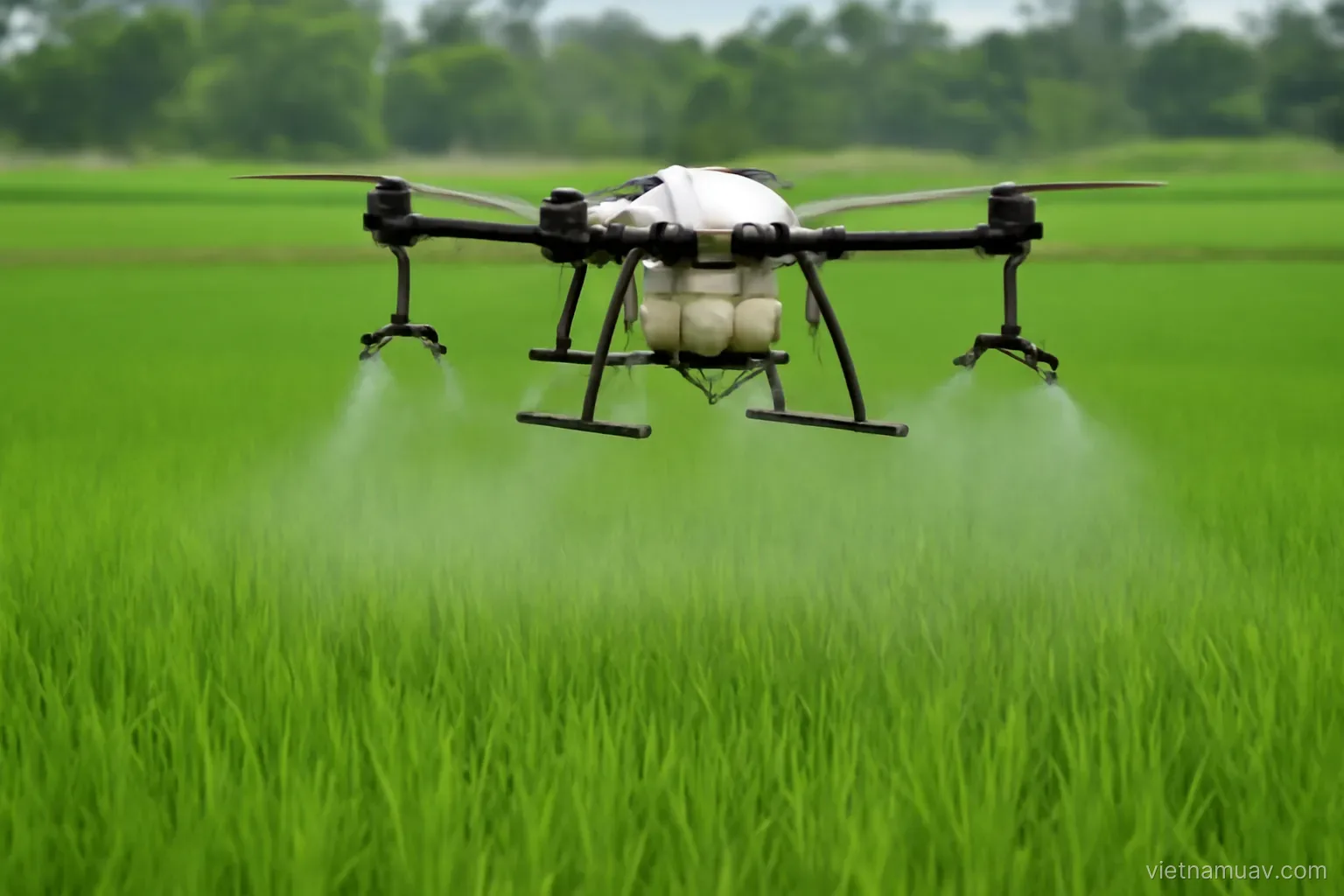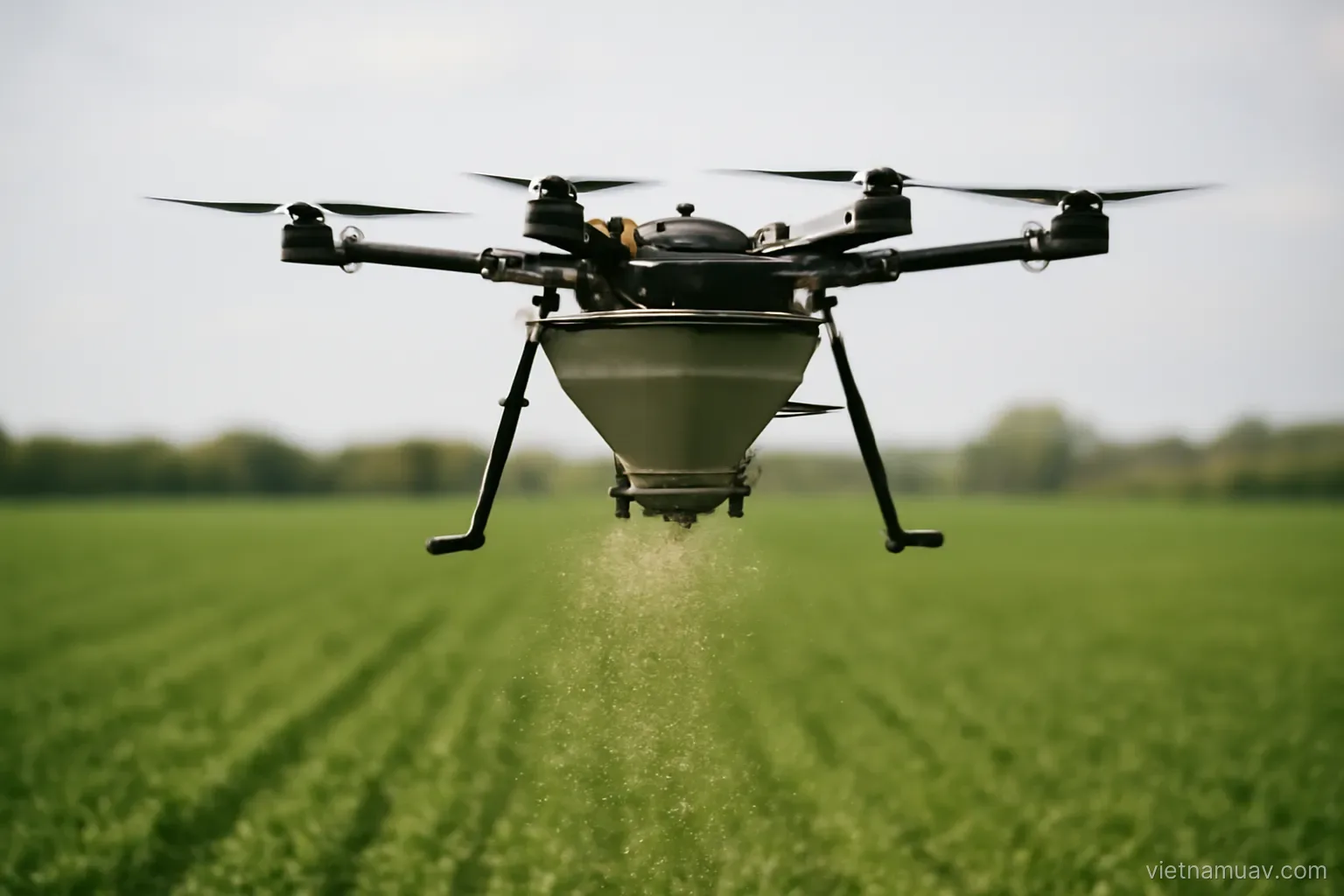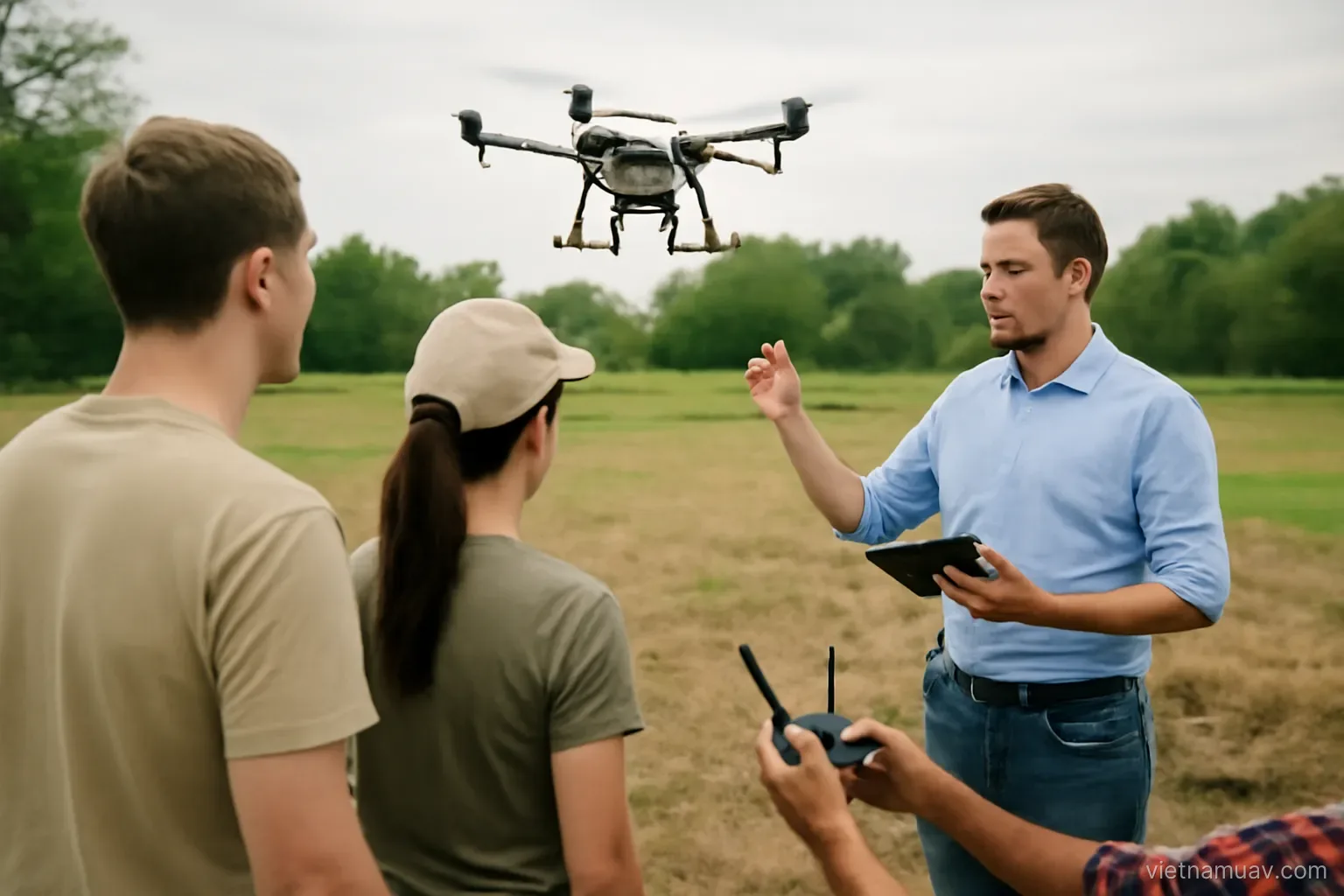
Agricultural drones operate in more demanding conditions than almost any other category — corrosive chemicals, dust, intense sun, high humidity, and dozens of flights a day during the season.
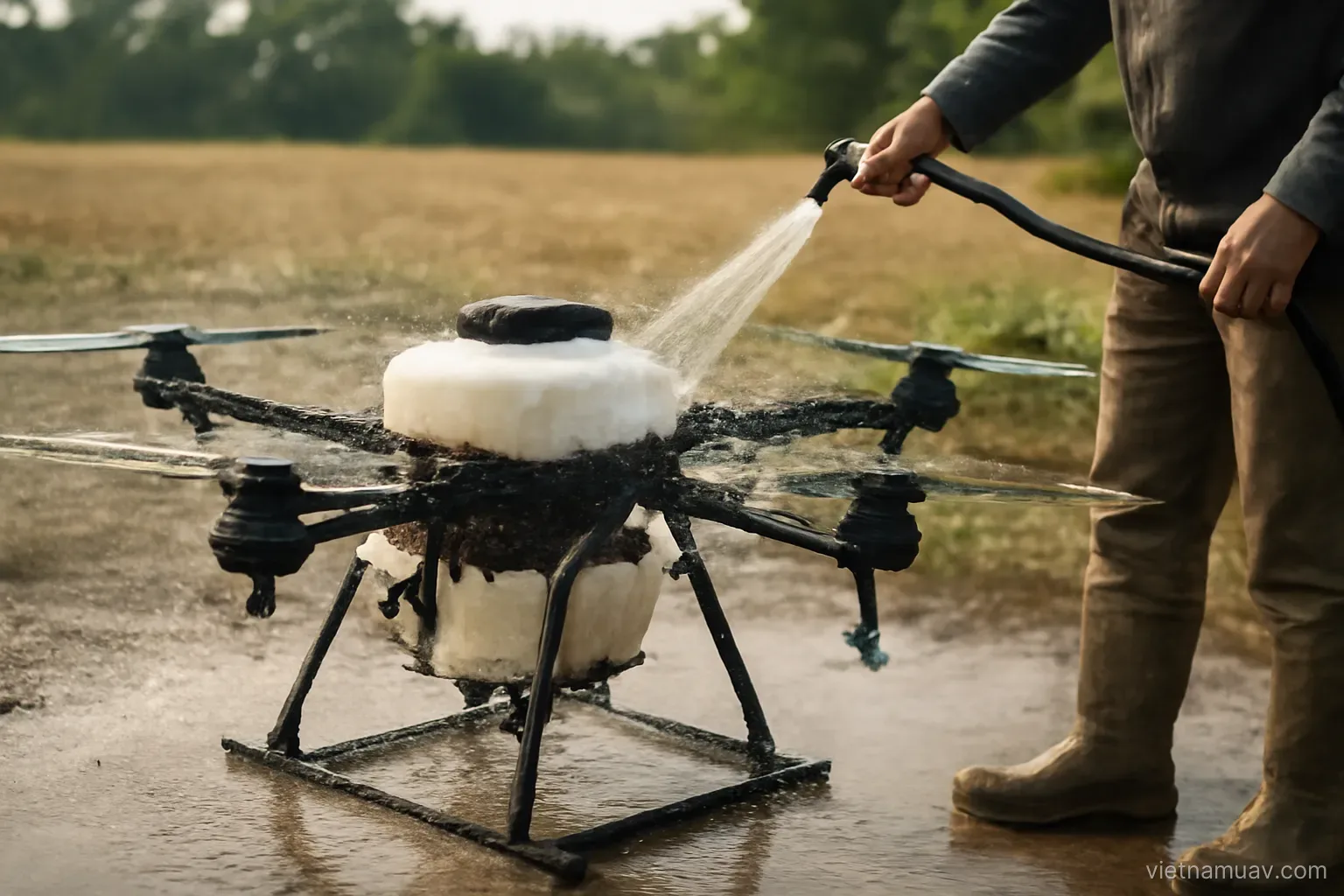
End-of-session cleaning
The most important task. And the one most often skipped after a long day.
Flush the spray system. Clean water pumped through everything. Dried product blocks nozzles and corrodes internals.
Remove and clean nozzles. A blocked nozzle produces uneven application that nobody notices until results are poor.
Clean the filters. In the tank and before the pump.
Wipe the airframe. Residue on the exterior degrades plastics and metals over time.
Careful with water. Do not spray directly at motors, boards or connectors. Use a damp cloth for those.
Dry thoroughly. Especially connectors. Trapped moisture corrodes contacts.
Dry in shade. Not in direct sun, which degrades plastics and batteries.
Check the tank seal. Residue on the gasket lets product weep out during the next flight, which corrodes whatever it lands on and wastes chemical.
Log what you cleaned. A short note is enough. When a nozzle problem appears three weeks later, knowing when it was last stripped narrows the diagnosis immediately.
Twenty minutes. Skipping it saves twenty minutes today and costs days of repair later.
Inspection routine
Before every flight. Propellers for cracks or chips, fasteners for looseness, frame for cracks, batteries for swelling.
Propellers. The single most safety-critical part. A small crack can propagate into a failure mid-flight. Inspect visually and by gentle flexing.
Replace on schedule. Not when damage becomes visible. Propellers have a life measured in flight hours.
Motors. Turn by hand. Smooth, no noise, no play.
Frame and arms. Cracks from vibration and impact, particularly at joints.
Landing gear. Takes an impact on every landing.
Pump and hoses. Leaks, cracks, swelling.
Sensors. Camera lens, obstacle sensors, radar if fitted. Mud and residue render them useless.
Wiring at the arm joints. Folding arms flex the cable bundle every time the aircraft is packed. Internal breaks here produce intermittent faults that are difficult to trace once the aircraft is airborne.
Spray boom alignment. A bent boom shifts the effective swath without any obvious symptom, so applications quietly become uneven.
Monthly during season. Deeper inspection — motors opened, internal wiring checked, sensors recalibrated.
Battery management
The largest cost after the aircraft. And the fastest to degrade.
Heat is the enemy. Spraying draws heavy current so batteries run hot, and ambient temperature in the field is already high. The combination shortens life sharply.
Cool before charging. Charging a hot pack accelerates damage. Wait at least fifteen minutes.
Shade them. Batteries left in the sun heat rapidly. Use an insulated box or shaded area.
Avoid deep discharge. Land with reserve. Deep cycling shortens life considerably.
Storage state. Mid voltage, neither full nor empty, in a cool dry place.
Number and track them. Record cycles and measured capacity per pack to identify weak ones.
Check for swelling. A swollen pack is retired immediately. The fire risk is real.
Rotate usage. Use the whole set evenly rather than favouring a few packs, so they degrade together.
After an incident
Do not fly again immediately. Inspect everything first.
Frame. Cracks may not be obvious. Check joints and load-bearing points carefully.
Motors. Turn each by hand. An impacted motor may have a bent shaft.
Replace propellers. Always after an impact, regardless of appearance. Micro-cracks are invisible.
Batteries. An impacted pack may be damaged internally. If in doubt, retire it.
Recalibrate sensors. Compass and accelerometers shift on impact.
Test flight in an open area. Low, unloaded, closely observed before returning to work.
Record the incident. Cause, damage, repairs. Look for patterns if incidents repeat.
Get professional inspection if unsure. An aircraft with hidden damage that fails a second time can cause far greater loss.
True operating cost
Aircraft depreciation. Service life measured in flight hours. Divide purchase price by expected hours.
Batteries. Usually the largest running cost. Calculated per cycle.
Propellers. A consumable, replaced regularly.
Other parts. Nozzles, pumps, hoses, landing gear.
Charging power. Significant with high flight volumes.
Travel. Vehicle, fuel, time.
Repairs and incidents. Provision a percentage. Incidents will happen.
Insurance and permits.
Idle periods. Work concentrates seasonally, so annual accounting is required. This is where most operators miscalculate and conclude the business is more profitable than it is.
Frequently asked questions
What is the most important maintenance task after spraying?
Flushing the entire spray system with clean water. Dried product blocks nozzles and corrodes internal components, and the damage accumulates quickly.
Why do agricultural drone batteries degrade so fast?
Spraying draws heavy current so packs run hot, and field ambient temperature is already high. Cool for at least fifteen minutes before charging and keep packs shaded.
What should always be replaced after an impact?
Propellers, regardless of how they look. Micro-cracks are invisible and can propagate into a failure during a later flight.
Which cost do service operators most often miscalculate?
Idle periods. Work concentrates into a few intense weeks, so revenue and cost must be assessed annually rather than from peak-day figures.
More in Flight data processing and Search and rescue.