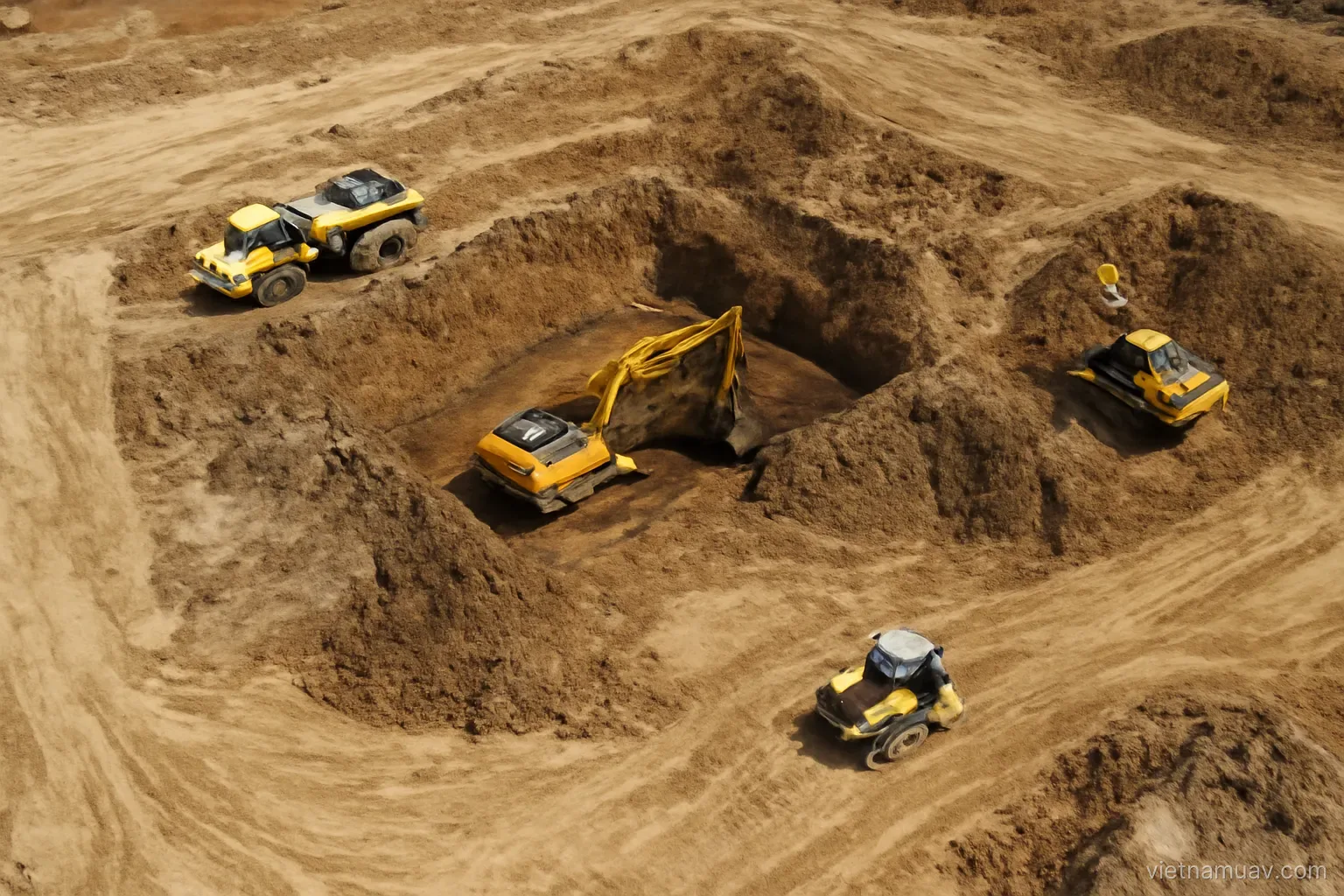
Construction is where drone survey found its first reliable commercial footing, because the measurement task repeats, covers large areas, and has direct financial consequences.
Measuring earthwork volumes
The method. Survey at two points in time, compare the two elevation surfaces, integrate the difference.
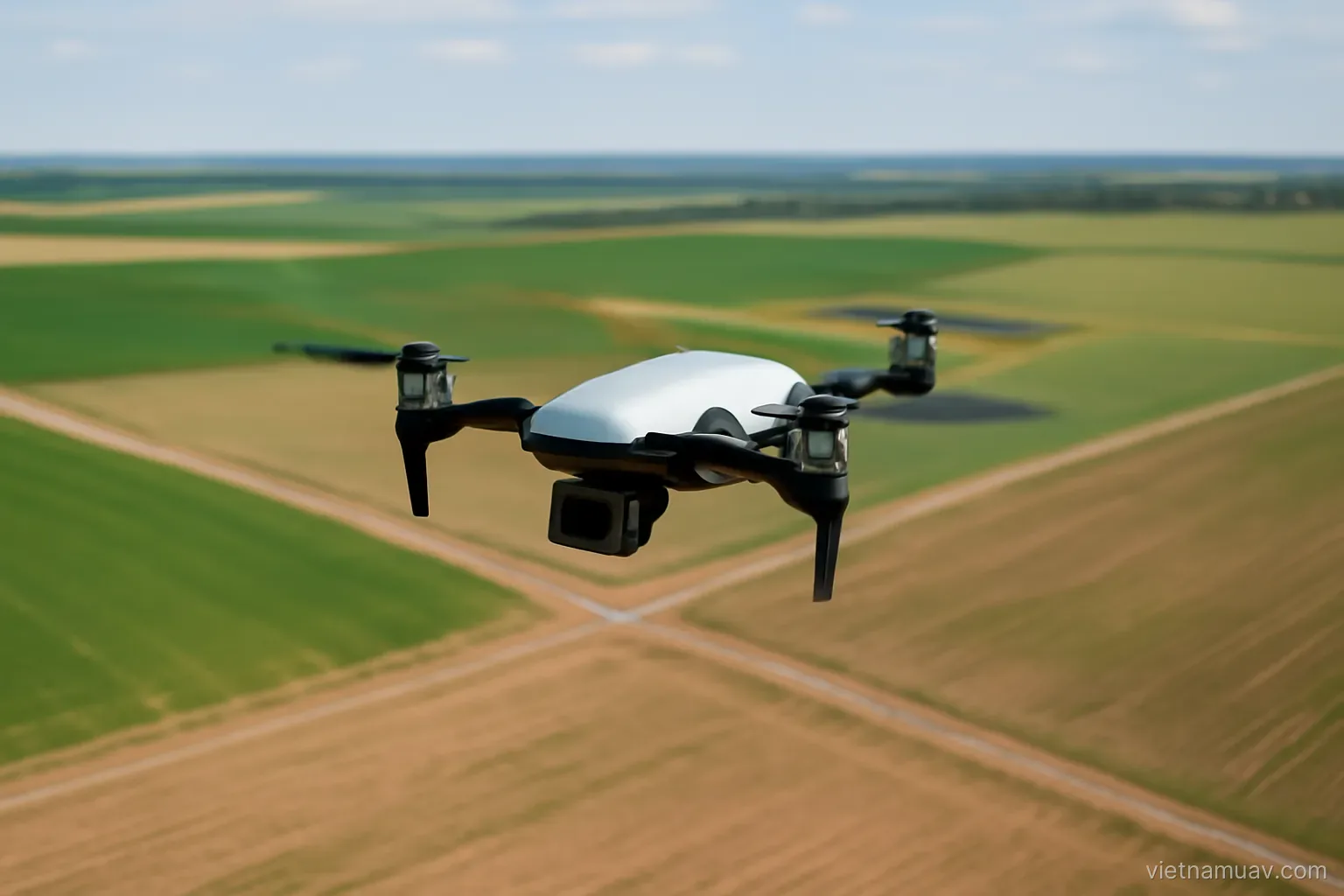
Why it works commercially. Conventional measurement over a large site consumes many days of surveyor time. A drone covers it in a morning.
Accuracy requirements are strict. Vertical error translates directly into volume. One centimetre across a hectare is a hundred cubic metres.
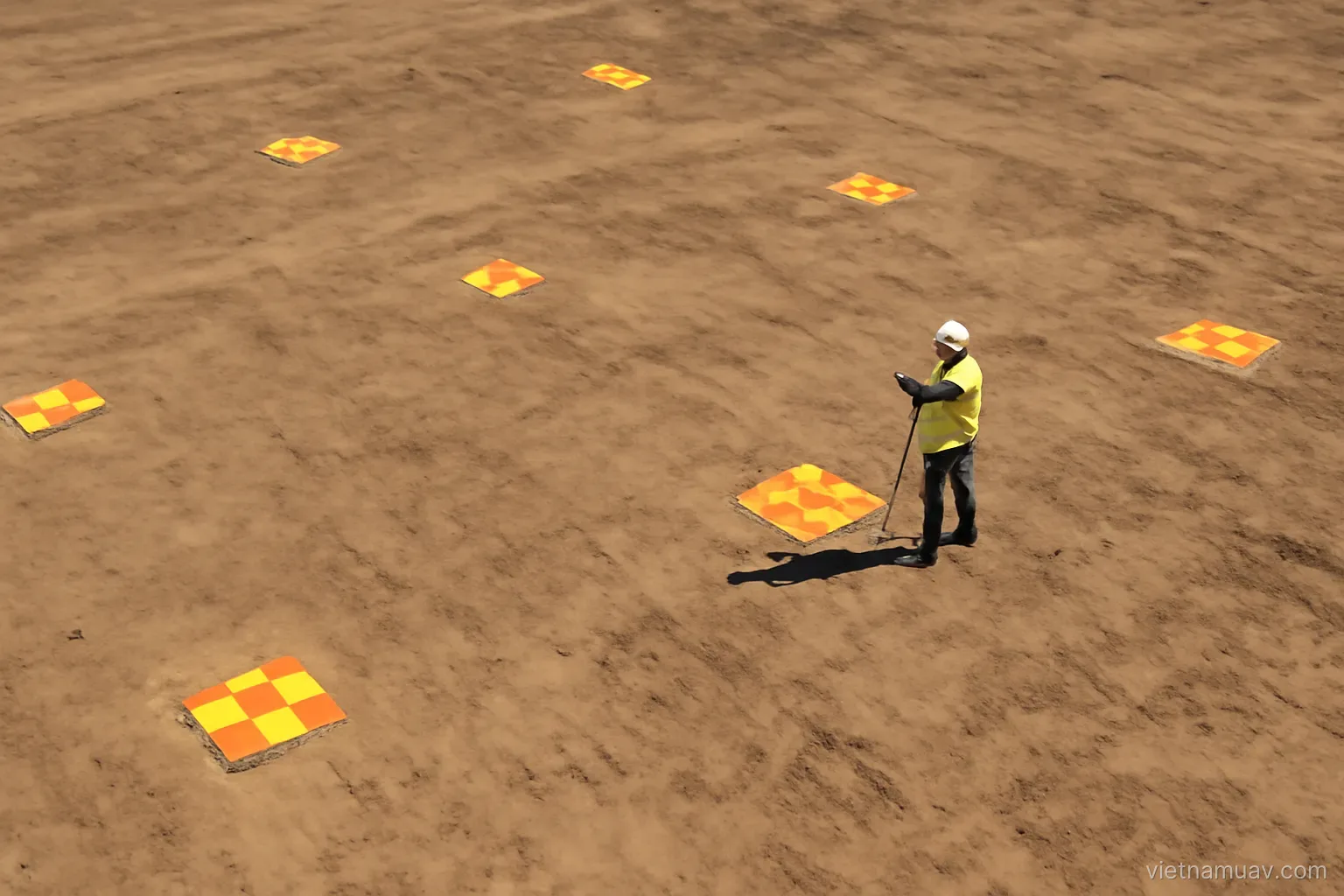
Which makes control critical. And the same control marks must be reused between surveys so both surfaces share a reference frame.
Permanent monuments. Concrete markers outside the working area, surveyed once and reused. Worth the initial effort on any site with repeated measurement.
Define the reference surface. Volume relative to what — original ground, design level, or the previous survey. This must be agreed with the client, not assumed.
Loose material. Stockpiles have bulking factors. Geometric volume is not tonnage. Agree the conversion.
Document the process. Volume measurement feeds payment, so the method and results should be recorded and countersigned.
Progress records
Regular flights. Weekly or monthly depending on the pace of work.
The main value. An objective, dated record of site condition. It settles a substantial share of programme disputes on its own.
Comparison against design. Overlay current condition on the drawings. Divergence becomes visible immediately.
Keep conditions consistent. Same flight lines, same altitude, ideally similar time of day. Consistency is what makes comparison meaningful.
Organised archive. Filed by date and easily retrievable. Over a long project this record becomes a genuine asset.
Two audiences. Client-side needs an overview and headline figures; site management needs detail. These are different reports.
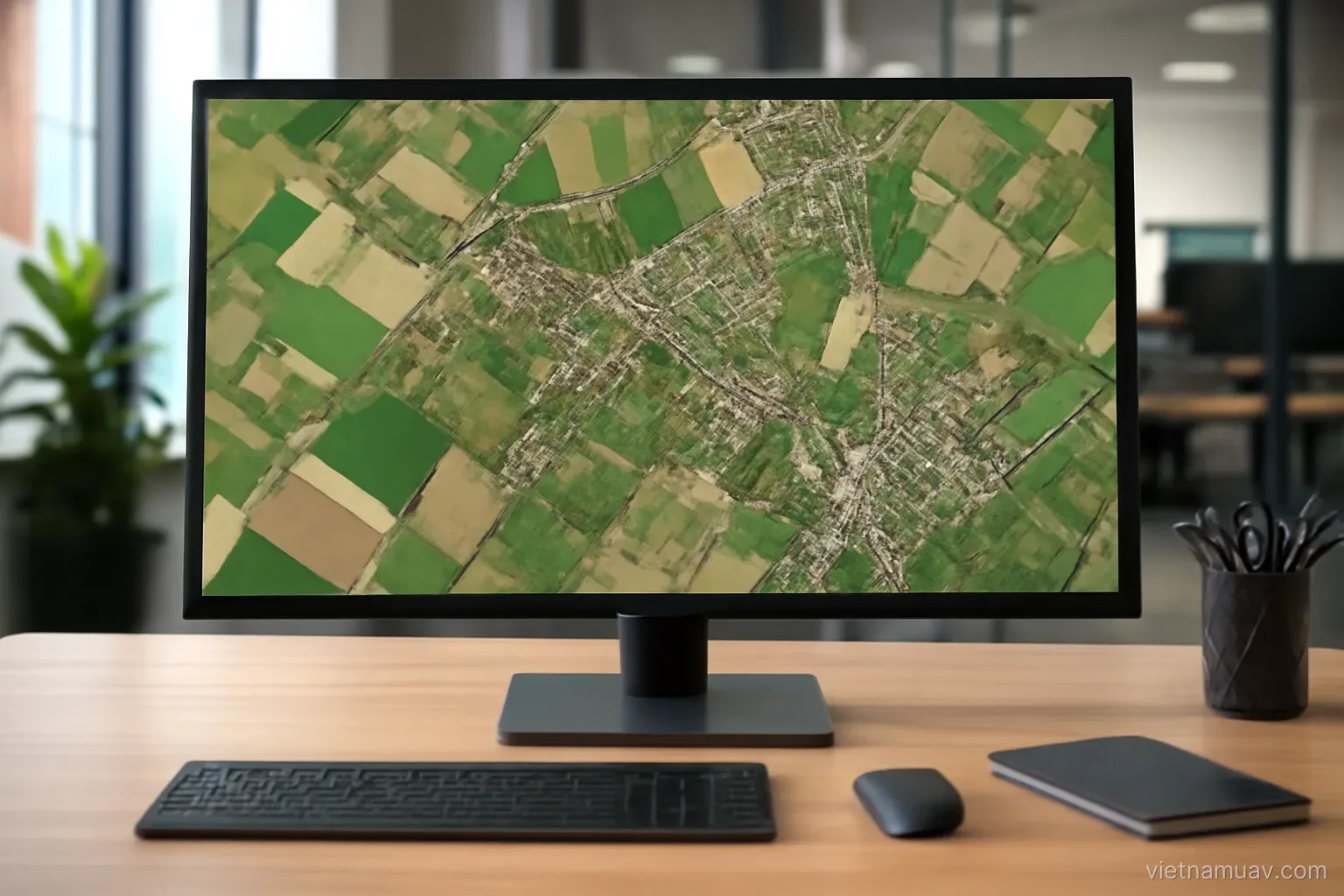
Deliver analysis, not just imagery. What is complete, what quantity moved, how it compares to the last period.
Cost against value. Periodic flights are inexpensive, and avoiding one dispute typically covers a year of them.
Condition and structure inspection
Roofs and facades. Inspected without scaffolding or rope access. Faster and considerably safer.
Bridges and structures. Close imagery of positions that are difficult or hazardous to reach.
Linear assets. Power lines, pipelines, drainage channels. Long routes covered efficiently.
Different flying to survey work. Close, oblique, detail-focused. High overlap and orthomosaics are not the point.
Technique. Slow flight, multiple angles, high resolution. Log the position of each image so any defect can be located again.
Higher risk. Flying near structures means collision hazard and degraded satellite positioning. This work needs experienced crew and a contingency plan.
Thermal imagery. Adds value on electrical assets, water ingress and insulation defects.
Reporting. Defects located, classified and photographed, not just an image set handed over.
Working on an active site
Coordinate first. With site management. Agree timing and identify exclusion zones.
People below. Sites are populated. Do not overfly personnel, and use a spotter where movement is heavy.
Cranes and tall plant. Serious obstacles. Survey them and design flight lines around them.
Magnetic interference. Large steel structures disturb the compass and satellite reception. Check before launch and stay alert near them.
Launch point. Level, clean, well away from active works, with room to operate.
Dust. Sites are dusty. Clean the aircraft and lens after every session.
Timing. Breaks or before shift start mean fewer people and less plant movement.
Site rules. Helmet, high-visibility clothing, boots and induction are usually mandatory. Turning up without them wastes the trip.
Selling into the construction sector
Understand the actual need. Clients want evidence and numbers for decisions, not attractive imagery.
Price against the alternative. Conventional survey cost, or the value of catching a problem early.
Long-term arrangements work better. Periodic flights across a project deliver more value to both sides than a single engagement.
Commit to accuracy. Stated in the contract with a stated verification method. This separates professional providers from the rest.
Insurance. Operating on a live site carries real liability. Cover is expected.
Compliance. Full documentation. Larger clients ask for proof before award.
Turnaround. Speed has value. Results in three days beat results in two weeks by a wide margin.
Relationships. The sector runs on referral. One project delivered well opens several more.
Frequently asked questions
Why is vertical accuracy so critical for volume measurement?
Because it translates directly into volume — one centimetre of error across a hectare is a hundred cubic metres. That is why control marks must be permanent and reused between surveys.
What makes progress surveys comparable between visits?
Same flight lines, same altitude, similar time of day, and the same permanent control monuments outside the working area.
How does inspection flying differ from survey flying?
It is close, oblique and detail-focused, with multiple angles per feature. High overlap and orthomosaics are not the objective, and the collision risk is considerably higher.
What separates a professional survey provider commercially?
A stated accuracy commitment in the contract with a defined verification method, plus a report that names which areas are unreliable and why.
More in Flight data processing and Airspace rules and permits.