A written procedure sounds bureaucratic. In practice it is how the work produces consistent results regardless of who is doing it and regardless of whether they are tired.
Preparation phase
Clarify the requirement. Deliverable, accuracy, deadline, constraints.
Reconnaissance. By map and, where possible, on the ground.
Airspace and permissions. Started early, because processing takes time.
Risk assessment. Written down rather than considered mentally.
Flight plan. Lines, sortie count, expected duration.
Role allocation. Who does what within the crew.
Equipment preparation. Against the list, checked and charged.
Local liaison. Authorities, landowner, anyone affected.
Confirm the weather window. Not just that the day looks acceptable but which hours are workable, since that determines when the crew has to be on site.
Agree the deliverable format. Before flying rather than after, because it occasionally affects how the flight itself is planned.
Control point. One person reviews the whole preparation before departure. A gap found here costs a phone call rather than a wasted journey.
On-site phase
Arrive early. Time to assess actual conditions and adjust.
Reassess risk. Reality frequently differs from the plan.
Set up the area. Launch point, equipment position, safe zone for people.
Pre-flight checks. From the list, read aloud when working as a crew.
Test hover. Low, brief, before departing on task.
Execute. To plan, with the observer monitoring.
Check between sorties. Data and equipment condition after each one.
Stop criteria. If conditions deteriorate or a problem appears, land and reassess.
Note anything unexpected. Obstacles not on the plan, access difficulties, people present who were not anticipated. This informs the next visit as much as the current one.
Keep the client informed. A short message when the flying is complete avoids the question arriving later at an inconvenient moment.
Closing check. Data complete, backed up, equipment accounted for, site left clean.
Post-flight phase
Back up on return. A second copy added.
Log the flights. While the detail is fresh.
Reconcile against the plan. Was everything intended actually flown, does anything need supplementing. Discovered now, it can still be flown; discovered during processing, it cannot.
Update cumulative hours. Per aircraft and per battery, feeding the maintenance schedule.
Clean and inspect equipment. Before storage.
Charge batteries. After cooling.
Process the data. To the standard workflow.
Quality control and reporting. Before delivery.
File the paperwork. Permission, correspondence and logs into the project folder while everything is still to hand.
Debrief. What was slow, what was missing, what nearly went wrong. Record it and amend the procedure.
Roles and responsibility
Crew leader. Makes the final call, particularly the decision not to fly.
Pilot. Concentrates on flying. Does not take on other tasks while airborne.
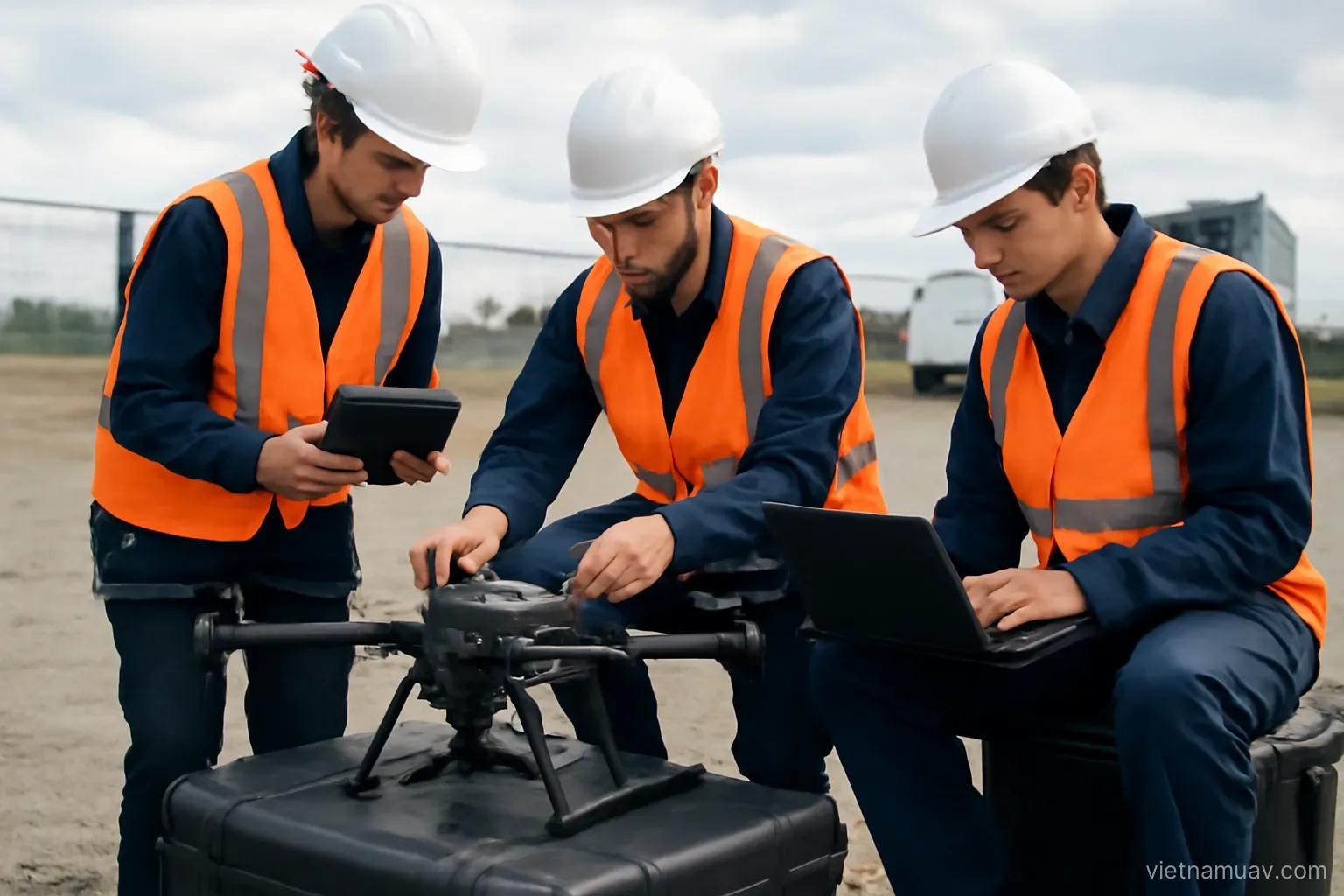
Observer. Watches the aircraft and the airspace, warns about obstacles and people, manages bystanders.
Support. Batteries, equipment, record keeping.
Roles can be combined. On simple tasks. But the pilot should never also be the observer.
Anyone may stop the operation. Seeing a hazard means saying so, and being heard.
Brief before starting. Who does what, how you will communicate, what happens on an abort.
New crew work alongside experienced crew. For the first several projects. Learning by watching and doing under supervision is both faster and safer than reading.
Name a deputy. Somebody who takes the leader role if that person is occupied or absent, so decisions never stall waiting for one individual.
Rotate roles within the team. Someone who has worked as observer becomes a better pilot, because they understand what the observer needs.
Building and maintaining procedure
Start simple. A checklist and role allocation is enough for a small crew.
Add from experience. Each incident or omission adds a step.
Keep it concise. A long procedure is neither read nor followed.
Write it for the user. Plain language, images where they help.
Keep it where it is used. Printed in the equipment case, not only on a computer.
Train new people to it. And let them ask questions — a newcomer's questions reveal where the procedure is unclear.
Review periodically. Steps that never catch anything can go; steps that repeatedly catch problems deserve emphasis.
Follow it when rushed. This is when it matters most and when it is most often abandoned.
Version it. So everyone is working to the same revision rather than to whichever printout they happen to be carrying.
Frequently asked questions
Which role should never be combined?
Pilot and observer. The pilot concentrates on the screen and the task while the observer watches the aircraft and the surrounding airspace.
What is the most valuable control point in the preparation phase?
One person reviewing the whole preparation against the list before departure. A gap found then costs a phone call rather than a wasted journey.
Why reconcile flights against the plan on return?
Because a missing block discovered on the same day can still be flown, whereas the same gap discovered during processing means returning to site.
When is a written procedure most valuable?
When the crew is rushed — which is exactly when procedures are most often abandoned and when incidents cluster.
More in Flight planning and Sensors and payloads.