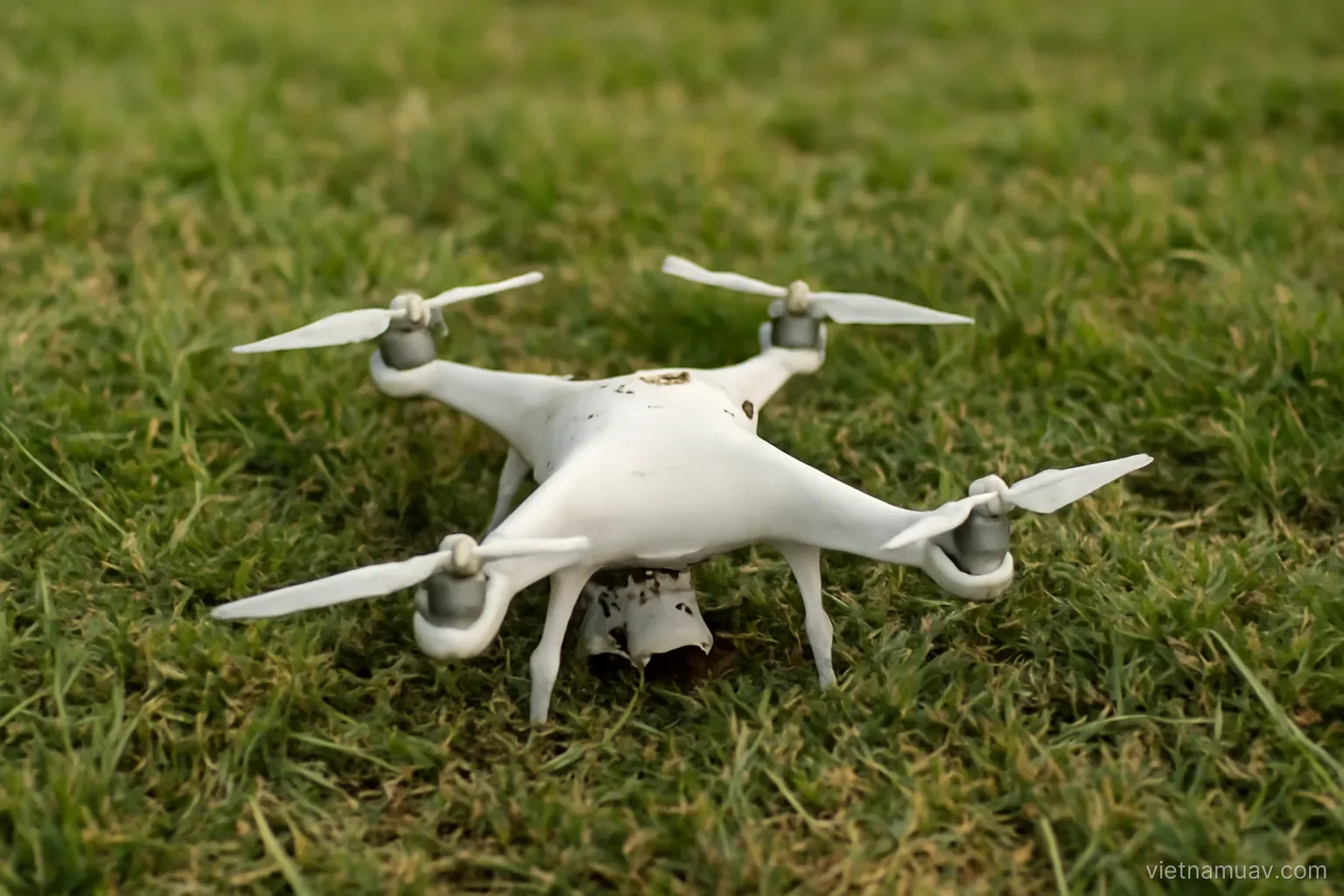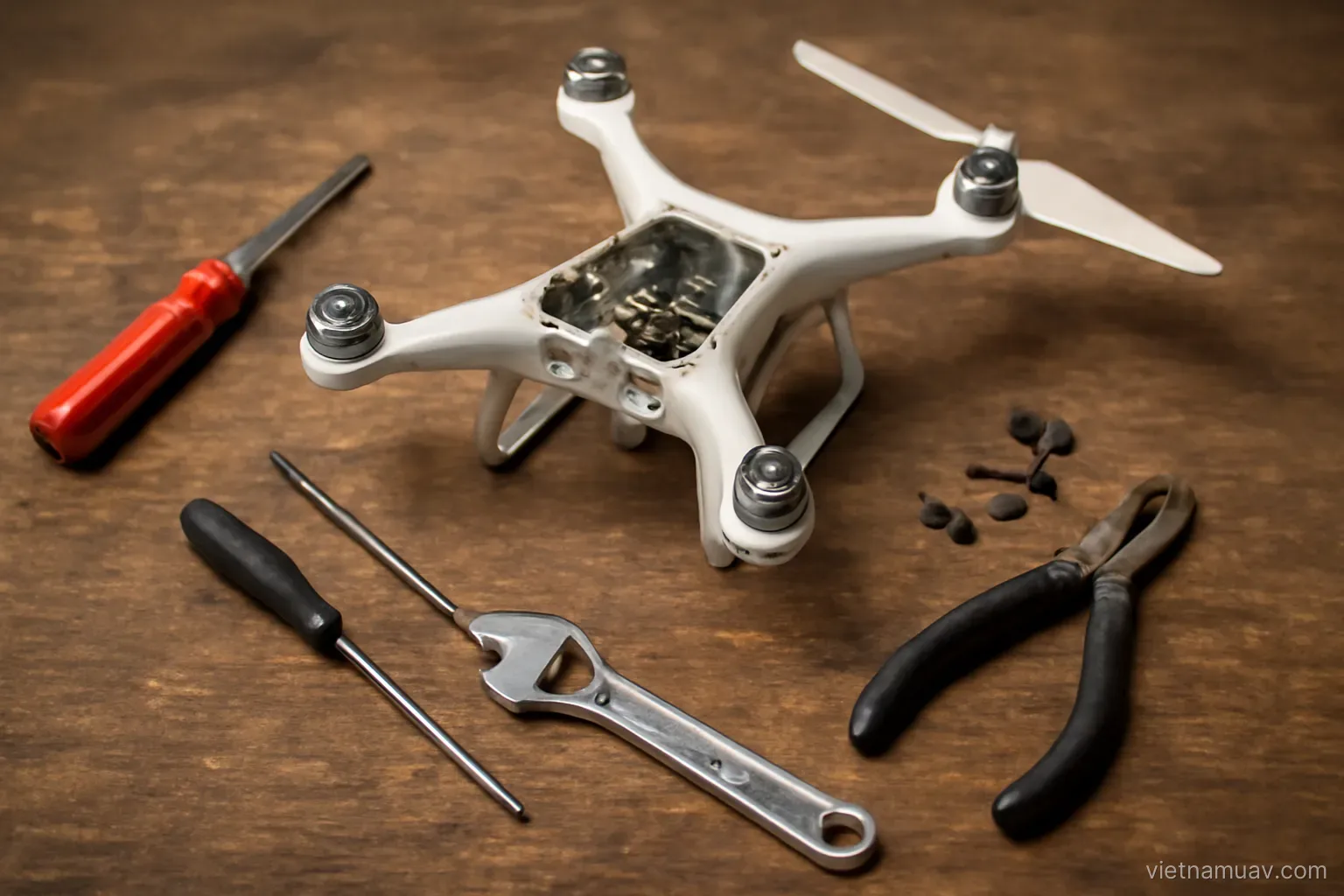
Aircraft used commercially fly many hours a week in real conditions. Scheduled maintenance is the difference between equipment that lasts years and equipment that fails mid-project.
Before and after every flight
Propellers. Cracks, chips, warping, contamination. The most safety-critical component.
Motors. Turned by hand. Smooth, quiet, no play.
Frame. Cracks, particularly at arm joints.
Fasteners. Loosened by vibration. Check the principal ones by hand.
Landing gear. Takes an impact every landing.
Gimbal. Free movement, no binding, no play.
Lens. Clean and unscratched.
Battery. No swelling, clean contacts, firmly seated.
Obstacle sensors. Clean and unobstructed. Mud or residue on a sensor makes it useless without producing any warning.
Arm latches. Where the airframe folds, the latches must seat fully. A partially latched arm changes the geometry and the flight controller will fight it.
After flying. Repeat the checks, clean off dust and mud, and look for any impact damage acquired during the sortie.
Hour-based maintenance
Count flight hours. From the log or from the aircraft's own record.
Replace propellers on schedule. Not when damage becomes visible. Fatigue accumulates invisibly.
Motor inspection. After a set number of hours, opened and bearings checked.
Internal wiring. Breaks develop where cables flex as folding arms are opened and closed.
Sensor calibration. Compass, accelerometers, obstacle sensors.
Gimbal service. Motors and vibration dampers.
Battery assessment. Measured capacity compared with original.
Firmware. Updated, but not immediately before an important project — new releases sometimes introduce problems.
Check the airframe geometry. After enough hours, or after any hard landing, arms can sit slightly out of true. It shows up as a persistent drift that no amount of calibration fixes.
Record it. Date, cumulative hours, work done, anything noticed.
Consumables
Propellers. The highest-turnover item. Always hold spares and replace on schedule.
Batteries. Life measured in cycles. Track and retire below a threshold.
Memory cards. Have a finite write life. Replace heavily used ones periodically.
Vibration dampers. Rubber hardens with age. Replace on schedule.
Landing gear. Wears and cracks.
Cables and connectors. Where frequently disconnected.
Lens filters and protectors. Scratch over time.
Buy the correct parts. Non-genuine propellers may fit mechanically but differ in balance and durability. Saving money on safety-critical components is a poor trade.
Inspect new parts on arrival. New propellers can be faulty from the factory. Look closely and weigh a pair if you can.
Label consumables with the date fitted. Knowing when a set of propellers went on is the only way to replace them on hours rather than on guesswork.
Hold enough for a project. And account for lead time on resupply.
Storage and transport
Hard case. With fitted foam, each item in its own place.
Gimbal lock. Always fitted before packing. An unlocked gimbal swings in transit and damages its motors.
Remove propellers. Where they detach. Fitted propellers are easily knocked.
Batteries separately. In fire-resistant bags, at storage voltage rather than fully charged.
Temperature. Never leave equipment in a vehicle in the sun. Cabin temperatures are extreme and destroy batteries.
Humidity. Store dry with desiccant in the case.
Inspect after transport. Rough roads loosen fasteners and disturb sensors.
Charge before long storage. Batteries left flat for extended periods may be permanently damaged.
Pack the same way every time. A consistent layout means a missing item is obvious at a glance rather than discovered on site.
Keep the case closed. Dust entering a case in storage ends up inside the aircraft the next time it is used.
Records and tracking
A maintenance record per aircraft. Cumulative hours, work performed, parts replaced.
Number the equipment. Where several airframes are in use, track each separately.
Track batteries individually. Cycles and measured capacity per pack.
Record every anomaly. However minor — an unusual warning, a different sound, increased vibration.
Look for patterns. The same component failing repeatedly indicates a deeper problem.
Compare across aircraft. One failing more than the others is either being worked harder or has a specific fault.
Note the operating environment. Aircraft working in dust, salt air or heat degrade faster, and the maintenance interval should reflect that rather than the generic recommendation.
Use it for planning. Anticipating replacement and budgeting for it.
And for resale. Equipment with a complete maintenance history sells faster and for more.
Frequently asked questions
Why replace propellers on schedule rather than on visible damage?
Because fatigue accumulates invisibly. A propeller that looks intact can still fail in flight after enough hours.
What is the most damaging storage mistake?
Leaving equipment in a vehicle in the sun. Cabin temperatures are extreme and destroy batteries while also degrading plastic components.
Should maintenance intervals follow the manufacturer exactly?
Use them as a starting point, then shorten for aircraft operating in dust, salt air or high heat, which degrade considerably faster than the reference conditions.
What benefit does a maintenance record bring beyond safety?
It allows replacement to be budgeted rather than arriving as a surprise, and equipment with complete history sells faster and for more.
More in Agricultural UAV and Airspace rules and permits.