An aircraft coming down in an empty field means lost equipment. Coming down on a person means something else entirely. Protecting people below sits above every other consideration in flight planning.
Understanding the risk
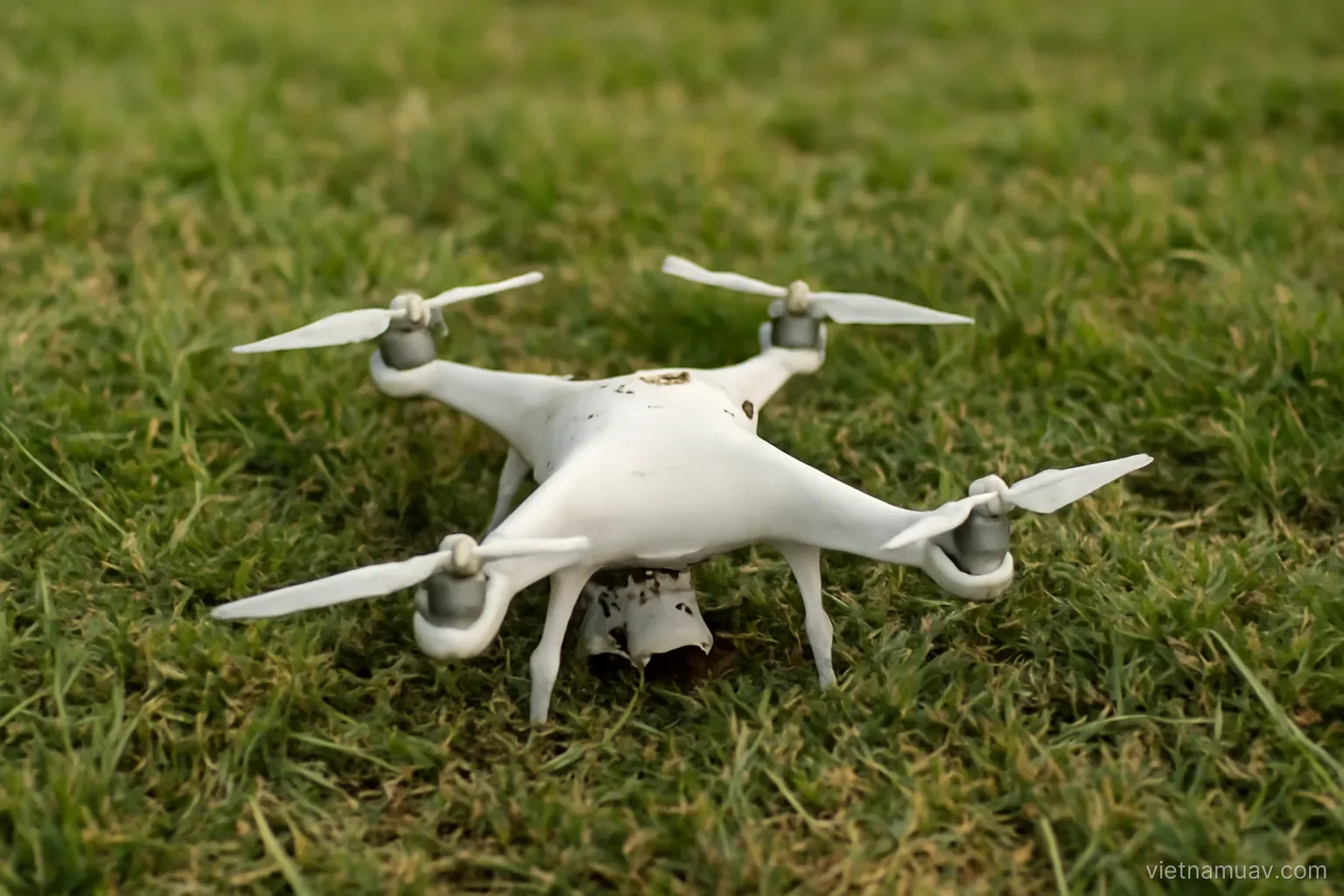
Propellers. Turning at high speed, causing deep lacerations. Dangerous even with the aircraft on the ground.
Impact energy. Depends on mass and height. A multi-kilogram aircraft falling from tens of metres carries substantial energy.
Uncontrolled descent. From motor failure, sudden power loss, link loss where return is impossible, or collision.
It does not fall straight down. An aircraft may travel laterally before it lands. The risk area is wider than the point directly below.
Falling objects. An unsecured payload, a loose battery, a shed propeller.
Startle reactions. People falling, dropping what they carry, vehicles reacting suddenly.
Vulnerable groups. Children, older people, and anyone who will not hear a shouted warning.
Assess by situation. Risk in an empty field is not comparable to risk in a residential street or at a gathering.
Consider what is below at every point of the route, not only where the aircraft will be working.
Separation
Do not fly over people. The most basic rule, including over your own crew.
Do not fly over crowds. Absolutely, without specific authorisation and protective measures.
Horizontal separation. Maintained from anyone not part of the operation, calculated from altitude and possible lateral travel.
Practical guideline. Horizontal separation at least equal to flight altitude. Flying at thirty metres means keeping thirty metres clear.
Launch and landing. The highest-risk phases. Keep everyone away from the pad.
Design routes around people. At the planning stage, not improvised in the field.
Fly parallel rather than across. Where you must operate near a road or housing.
If someone enters the area. Stop or move the aircraft away. Do not continue and hope.
Reassess when the site fills up. A location that was empty at eight in the morning may be busy by ten.
Controlling the area
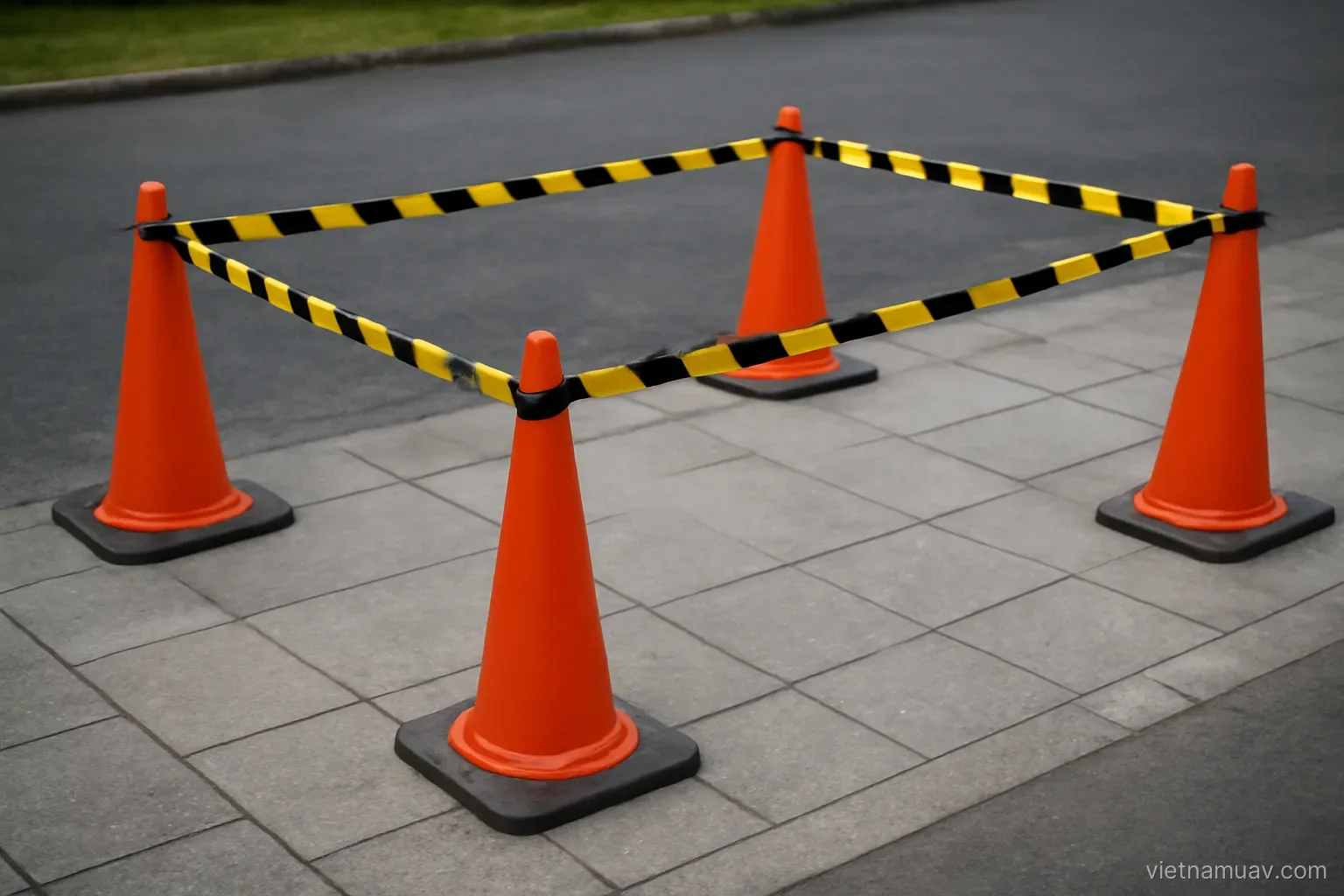
Mark it. Cones, tape, signage. So people understand something is happening and that they should stay out.
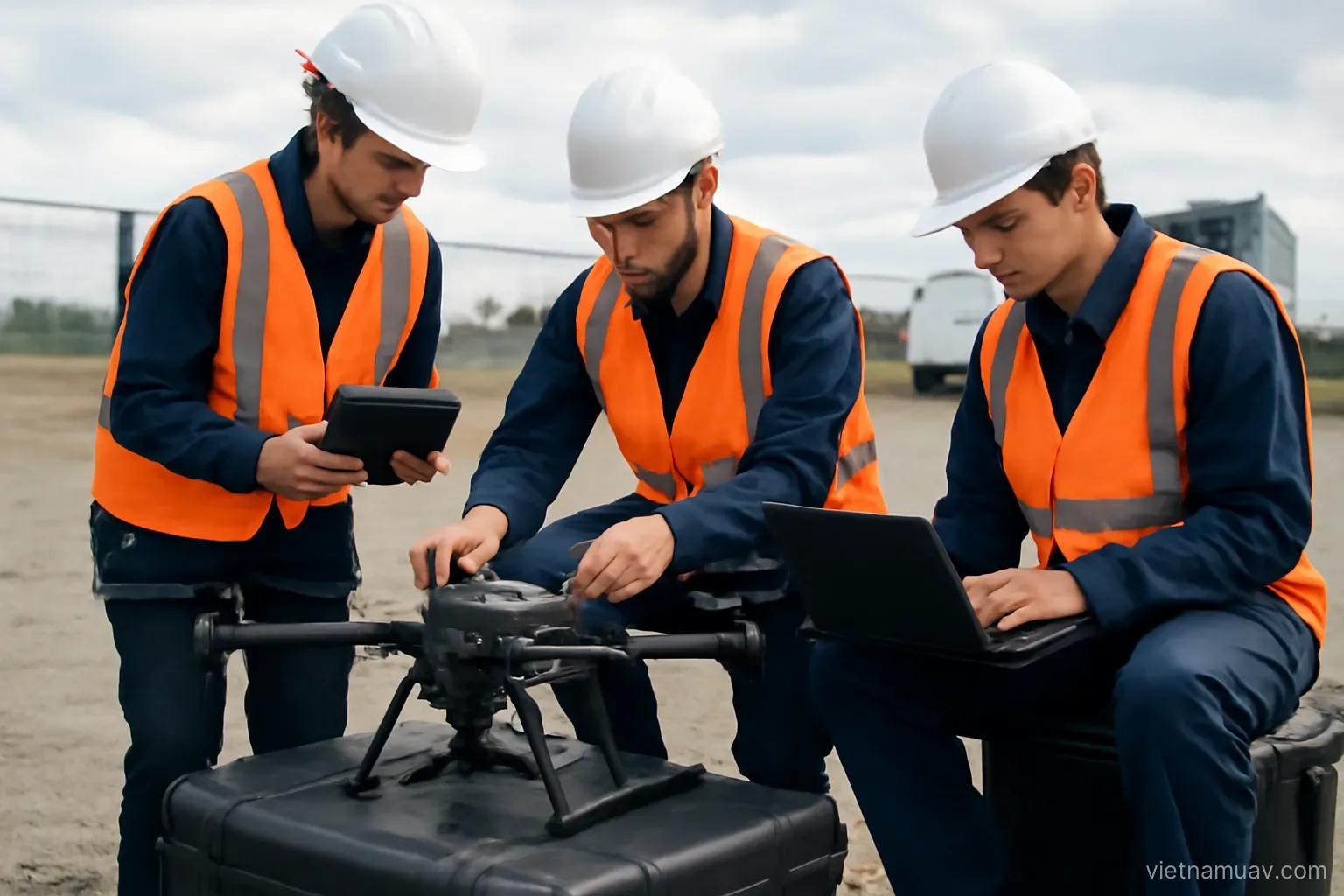
Post a marshal. Where there is pedestrian traffic. More effective than any sign.
Notify in advance. Residents and workers in the area.
Choose the timing. Quieter hours — early morning, lunch break, outside working hours.
Secure the launch point. The area needing the tightest control.
Buffer zone. Between the flying area and where people are.
Where control is impossible. In busy public space, changing the time or the method may be the only responsible option.
Record the measures taken. For your file and in case an incident occurs.
Tell the marshal what to do. Not only where to stand. Instructions such as stop anyone entering and signal me if you cannot are clearer than a vague brief.
Dealing with onlookers
People will come. Certainly, particularly in rural areas where drones remain a novelty.
Do not treat them as a nuisance. Good handling turns onlookers into supporters.
Explain briefly. What you are doing, for whom, how long it will take.
Show them the screen. Highly effective. Curiosity is satisfied and they stop approaching the aircraft.
Maintain separation regardless. Especially with children, who are drawn toward the aircraft and do not perceive the hazard.
Ask adults to hold children. Directly and politely.
Do not let anyone touch the equipment. Even when powered down. Settings get changed and components get damaged.
Assign this to someone. So the pilot can concentrate. It is another reason two people is the minimum.
Have an answer ready for the obvious questions. What it costs, whether it is filming them, whether it is legal. Prepared answers defuse most encounters.
If something happens
People before equipment. Check whether anyone is hurt before looking for the aircraft.
First aid. Someone in the crew trained, and a kit present.
Call emergency services if needed. Without hesitating.
Do not move a seriously injured person. Unless there is immediate danger where they are.
Preserve the scene. Where there is injury, it may be required for investigation.
Record it. What happened, when, who witnessed it. As soon as practicable.
Report. To the authorities as required, and to your insurer.
Do not argue about liability on site. Cooperate, record, and deal with it afterwards.
Analyse afterwards. Why it happened and what changes prevent a repeat. This is a professional obligation rather than an optional exercise.
Frequently asked questions
What is the practical guideline for horizontal separation?
At least equal to the flight altitude — flying at thirty metres means keeping thirty metres of horizontal clearance, because an aircraft can travel laterally before it lands.
Which flight phase carries the highest risk to bystanders?
Launch and landing, when the aircraft is close to the ground with propellers turning. Everyone should be kept clear of the pad.
What is the most effective way to handle onlookers?
Explain briefly and show them the screen. Curiosity is satisfied and they stop approaching, though separation must still be maintained, particularly with children.
What comes first if an incident occurs?
Checking whether anyone is hurt, before looking for the aircraft. People before equipment, and emergency services called without hesitation if needed.
More in Flight planning and Flight data processing.