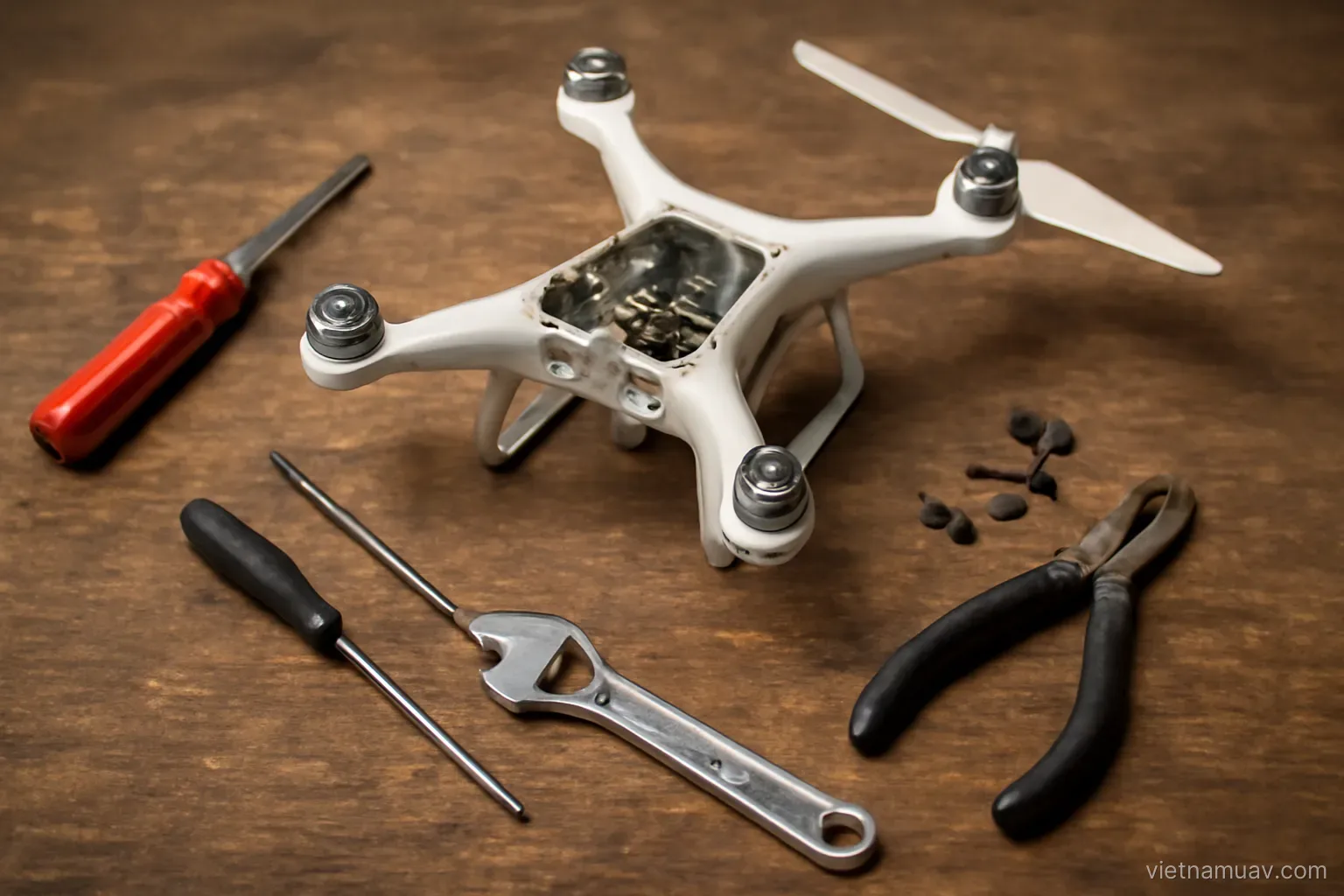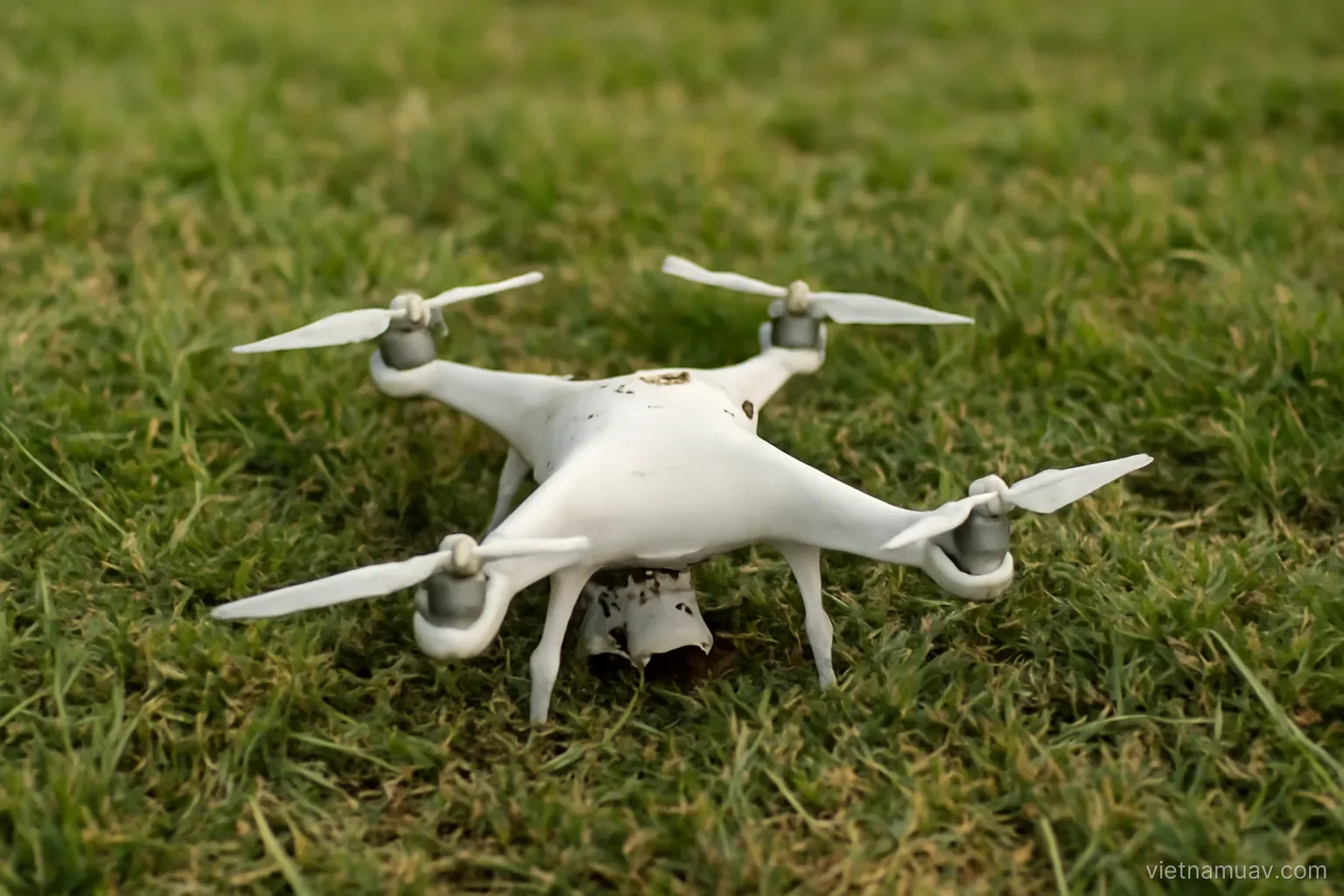
Fly enough and you will lose an aircraft. Preparation determines whether that is an expensive event or a contained one.
The moment control is lost
Do not panic. Many situations are recoverable if the first few seconds are handled correctly.
Link loss. Keep the controller pointed at the aircraft, climb if obstructions are the cause, wait for reconnection. It usually returns.
Motor failure. A multirotor may remain briefly controllable but not for long. Land at the nearest safe point immediately.
Loss of position hold. Switch to manual and bring it back using visual reference.
Sudden battery drop. Land now, do not attempt to reach the launch point.
Uncommanded drift. Wind or a sensor fault. Descend and land.
Prioritise a safe landing over recovering the aircraft. Coming down in an empty area beats dragging it back over housing.
Note the last position. Coordinates, heading, altitude. Immediately.
Say what you are doing out loud. If a crew is present, it keeps them informed and it forces you to think in sequence rather than react.
Searching for it
Use the last recorded position. The controller normally stores and displays it.
Download the flight log. It shows the track and the conditions at the moment of loss.
Estimate the landing zone. From altitude, speed and heading. An aircraft losing a motor can travel a considerable distance.
Search in an expanding spiral. From the estimated point.
Listen. Many aircraft have a locator alarm. Trigger it if any link remains.
Look for lights. Visible at dusk and after dark.
Ask locally. People know the ground and may have seen it come down.
Search from the air. With a second aircraft, effective in vegetation.
Over water. Recovery chances are low. Mark the position and weigh recovery cost against the value of the aircraft.
After recovery
Disconnect the battery immediately. Particularly after water immersion or any sign of a short.
Do not power it up. Until it has been inspected. Powering a shorted aircraft can start a battery fire.
Water immersion. Do not power up, remove the battery, rinse with fresh water if it was salt water, dry completely over several days.
Recovery is unlikely but not impossible. If the response is immediate and correct.
Inspect for damage. Frame, motors, propellers, gimbal, battery.
Photograph the condition. For insurance and for analysis.
Download the log first. Before doing anything else. It is the primary evidence of cause.
Repair or replace. Weigh repair cost against a new aircraft and against reliability afterwards.
Do not return it to service. Until fully inspected and test flown in an open area.
Establishing the cause
The flight log is the main source. Recording the state of everything through the flight.
Look for anomalies before the event. Voltage sag, abnormal motor current, rising vibration, warnings.
Common causes. Battery exhaustion from a planning error, collision with an unseen obstacle, link loss where return was impossible, mechanical failure such as a shed propeller or failed motor, and pilot error.
The root cause is usually deeper. Why did the propeller fail — because it was already cracked and not inspected. Why not inspected — because the crew was rushed, because the schedule was unrealistic.
Do not stop at pilot error. The pilot erred because of fatigue, inadequate training, or an unclear procedure. Fixing those prevents recurrence.
Record it fully. Including when the conclusion reflects badly on your own decisions.
Share within the team. Everyone benefits.
Change the procedure. An analysis that produces no change was a waste of effort.
Check whether the same condition exists elsewhere. If one propeller failed from an unnoticed crack, inspect the rest of the set rather than only replacing that one.
Insurance and cost
Hull cover. Pays for damage to or loss of the aircraft. Check the scope — water immersion, pilot error.
Liability cover. Considerably more important. Pays for harm caused to others, which can far exceed the value of the equipment.
Policy conditions. Usually require lawful operation with proper documentation. Flying without permission may void cover entirely.
Claim documentation. Flight logs, photographs, reports, permissions.
Report promptly. Many policies impose a notification deadline.
Provision in the business plan. Incidents will happen. Include a percentage in costing.
Spare aircraft. So an incident does not halt operations. For a serious operator this is a necessary rather than optional expense.
Count indirect costs. Schedule delay, reputation, time spent resolving it. These usually exceed the value of the equipment itself.
Review cover annually. Fleet, activity and exposure change, and a policy written three years ago may no longer match the operation.
Frequently asked questions
What should be prioritised when control is lost?
A safe landing over recovering the aircraft. Coming down in an empty area is far better than dragging a failing aircraft back over housing.
What must be done first after recovering a crashed aircraft?
Disconnect the battery and do not power up until inspected. Then download the flight log before anything else, since it is the primary evidence of cause.
Why not stop the analysis at pilot error?
Because the pilot erred for a reason — fatigue, inadequate training or an unclear procedure. Fixing those underlying conditions is what prevents recurrence.
Which insurance matters more?
Liability cover, because harm caused to others can far exceed the value of the equipment. Note that policies usually require lawful, documented operation.
More in Sensors and payloads and Survey and mapping.