A drone extends what a search team can see. It also attracts expectations it cannot meet, and misplaced expectation wastes time in a situation where time is the scarcest resource.
Genuine capability
Rapid area assessment. A single sortie gives command a picture of the terrain far faster than sending teams to walk it.
Access to unreachable ground. Cliff faces, midstream, landslide debris, structurally unsafe areas.
Scene assessment before entry. Reducing risk to the rescuers themselves, which is often the largest safety benefit.
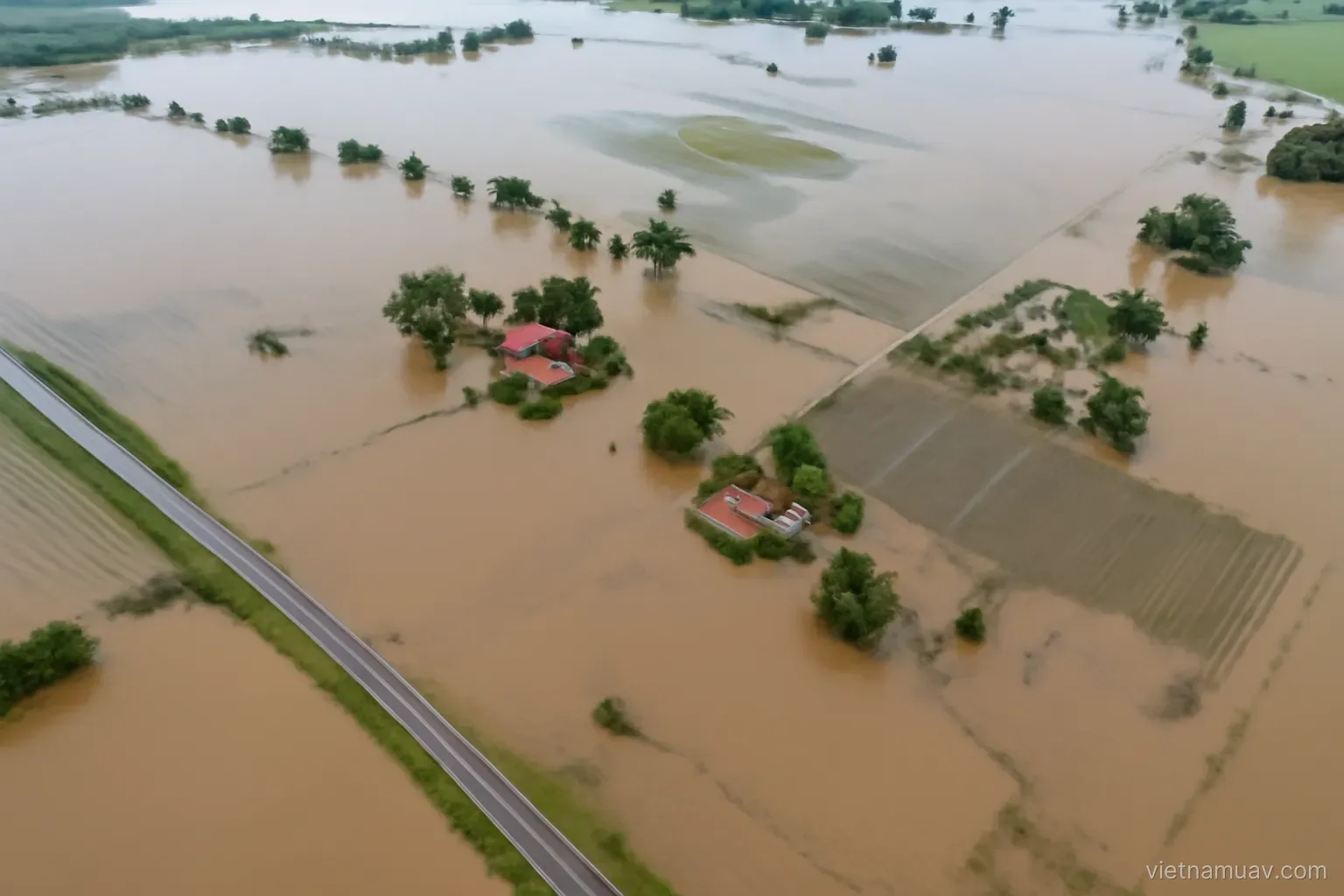
Rapid mapping after a disaster. Flood or landslide extent, giving command the overview needed to allocate resources.
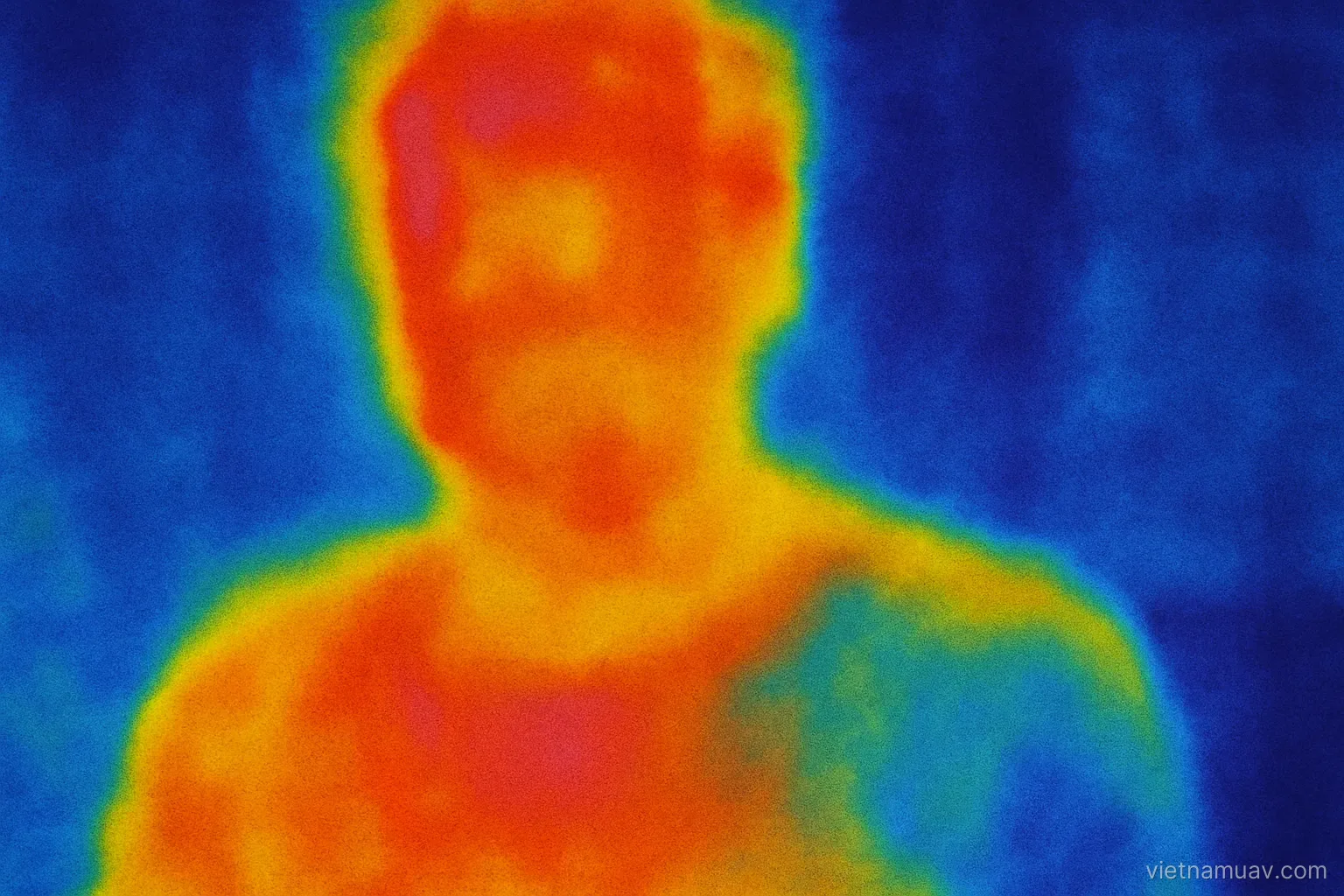
Thermal search at night. Detecting body heat where visual search is impossible.
Delivering small items. Water, a radio, a flotation device to someone not yet reachable.
Live relay. Sending imagery to a commander who is not on scene.
Documentation. A dated record of the scene for investigation and for later review.
Where drones fall short
They do not replace searchers. They extend observation; they do not perform detailed ground search.
They do not see through canopy. A person under dense forest is effectively invisible from above, including on thermal.
They do not see through water or debris.
Thermal has limits. It cannot reliably distinguish a person from an animal at range, and in daytime heat the thermal contrast largely disappears.
Endurance is short. Twenty to thirty minutes per flight. A sustained search needs many batteries and people to service them.
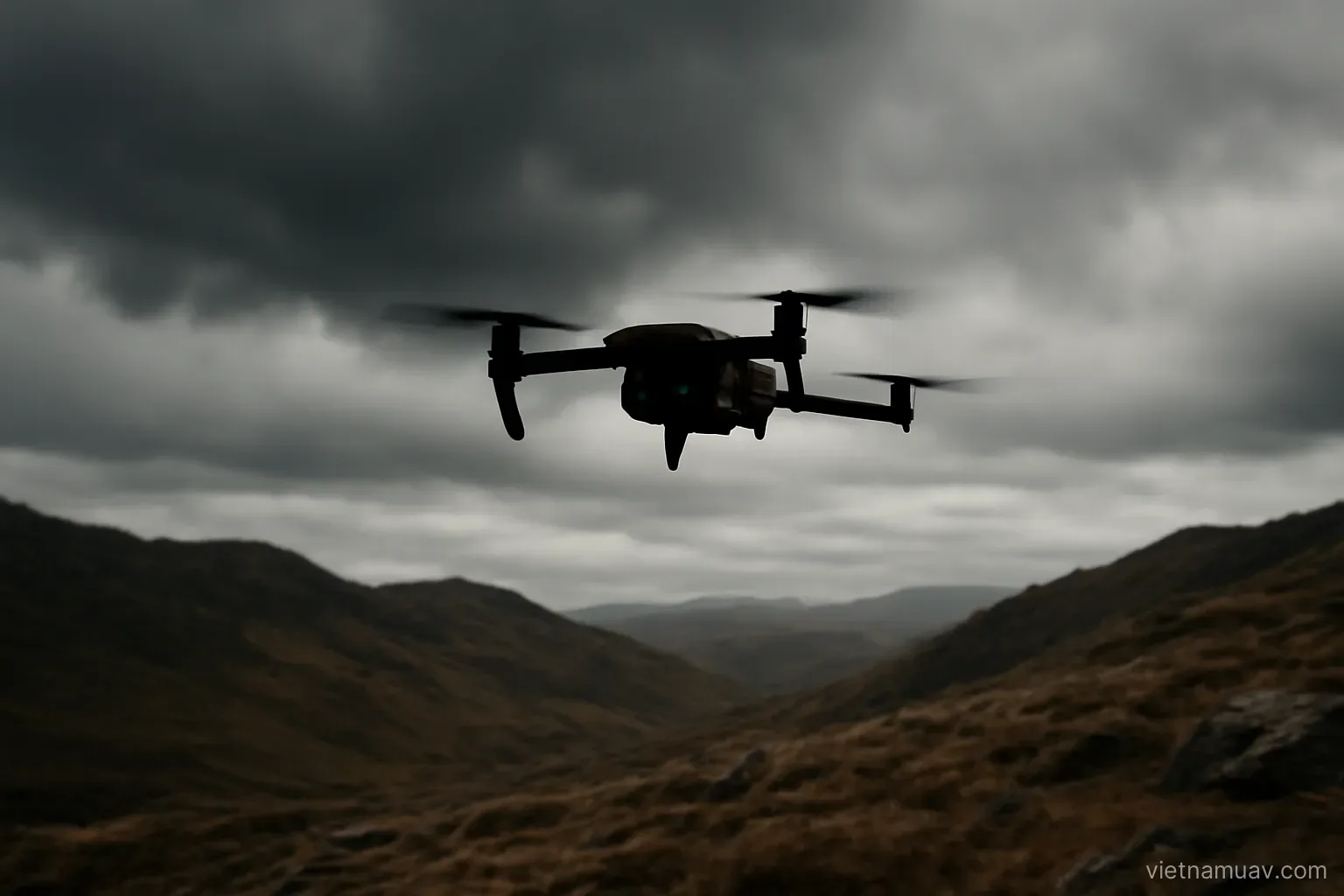
Weather dependent. Rain, strong wind and fog restrict or prevent flying — and those are frequently the conditions of the incident itself.
Someone has to look at the imagery. Thousands of frames with nobody reviewing them contribute nothing.
They do not work in confined spaces. Collapsed structures, tunnels and caves need different equipment entirely.
Search patterns
Parallel track. Straight lines covering an area evenly. Used when the search area is broad and there is no positional clue.
Track spacing. Derived from effective sweep width — not the width the camera sees, but the width within which an observer actually detects the target.
Effective sweep width is much narrower than expected. It depends on target size, contrast against the background, altitude, and how alert the observer is.
Expanding square or spiral. Outward from a point of interest. Used when there is a last known position.
Route search. Along a trail, riverbank or powerline where the subject was likely travelling.
Priority area search. Based on behavioural reasoning — lost people tend to move downhill, follow water, and seek shelter.
Record what has been covered. To avoid repetition and to show command what remains. This is essential information for planning.
Re-search covered ground. Under different light or with a different sensor, detection sometimes succeeds where it previously failed.
Using thermal effectively
Principle. The camera measures surface radiation. A person warmer than the background appears bright.
Best conditions. Night and early morning, once the environment has cooled. Thermal contrast is greatest then.
Worst conditions. Midday sun. Rock and soil reach or exceed body temperature and the target disappears into the background.
Resolution constraint. Thermal sensors have far fewer pixels than visual cameras. A person at range is only a few pixels.
Calculate the altitude. From thermal resolution and target size. Flying too high makes detection impossible regardless of how long you search.
False positives. Animals, sun-warmed rock, decomposing vegetation, chimneys. Every thermal signature requires verification.
Run both cameras. Thermal to detect, visual to confirm. Many aircraft display them overlaid.
The observer needs training. Recognising a human signature in thermal imagery is a learned skill, not an obvious one.
Working inside the command structure
The drone team belongs to the operation. Not flying independently alongside it. Tasking comes from incident command.
Check in before launching. Multiple uncoordinated crews are a hazard and a distraction.
Airspace deconfliction. If a rescue helicopter is operating, the drone lands. A collision with a crewed aircraft is catastrophic.
This rule is absolute. Hearing rotor noise means landing immediately, without negotiation.
Report promptly. Both positive findings and areas searched with nothing found.
Give exact coordinates. A vague description costs the ground team time that matters.
Do not approach a find. The drone operator is not a rescuer. Report and let the appropriate team respond.
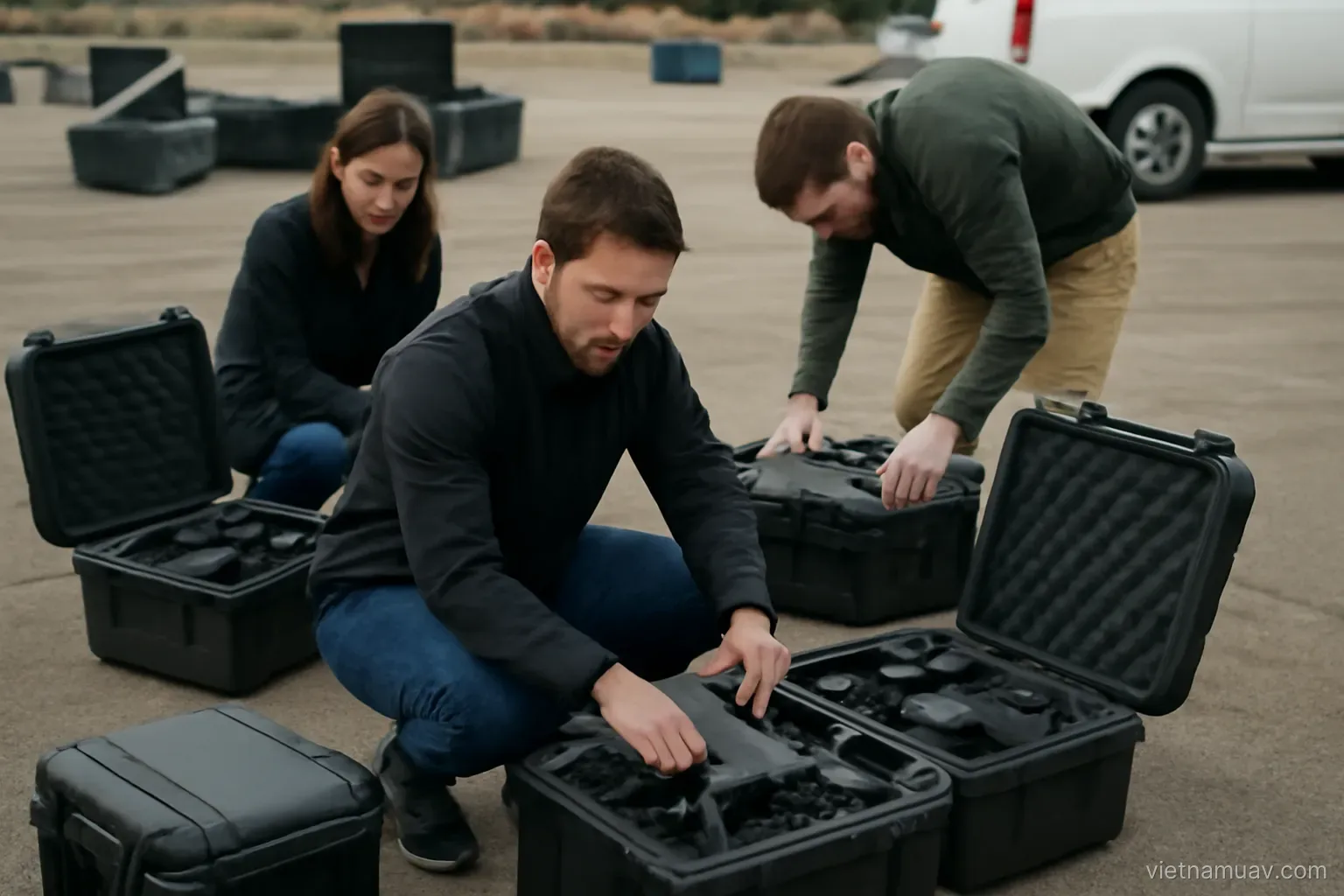
Train together beforehand. A drone team joining search operations should have worked with the rescue services in advance rather than meeting them for the first time at an incident.
Frequently asked questions
Can a drone replace ground searchers?
No. It extends observation and reaches ground that people cannot, but it does not perform detailed search and it cannot see through dense canopy.
When is thermal imaging least effective?
Midday sun, when rock and soil reach or exceed body temperature so the target disappears into the background. Night and early morning give the greatest contrast.
How is search track spacing determined?
From effective sweep width — the width within which an observer actually detects the target, not the width the camera covers. It is much narrower than most people assume.
What is the absolute rule when a rescue helicopter is operating?
Land immediately, without negotiation. A collision between a drone and a crewed aircraft is catastrophic, and the drone can always be relaunched.
More in Airspace rules and permits and Agricultural UAV.