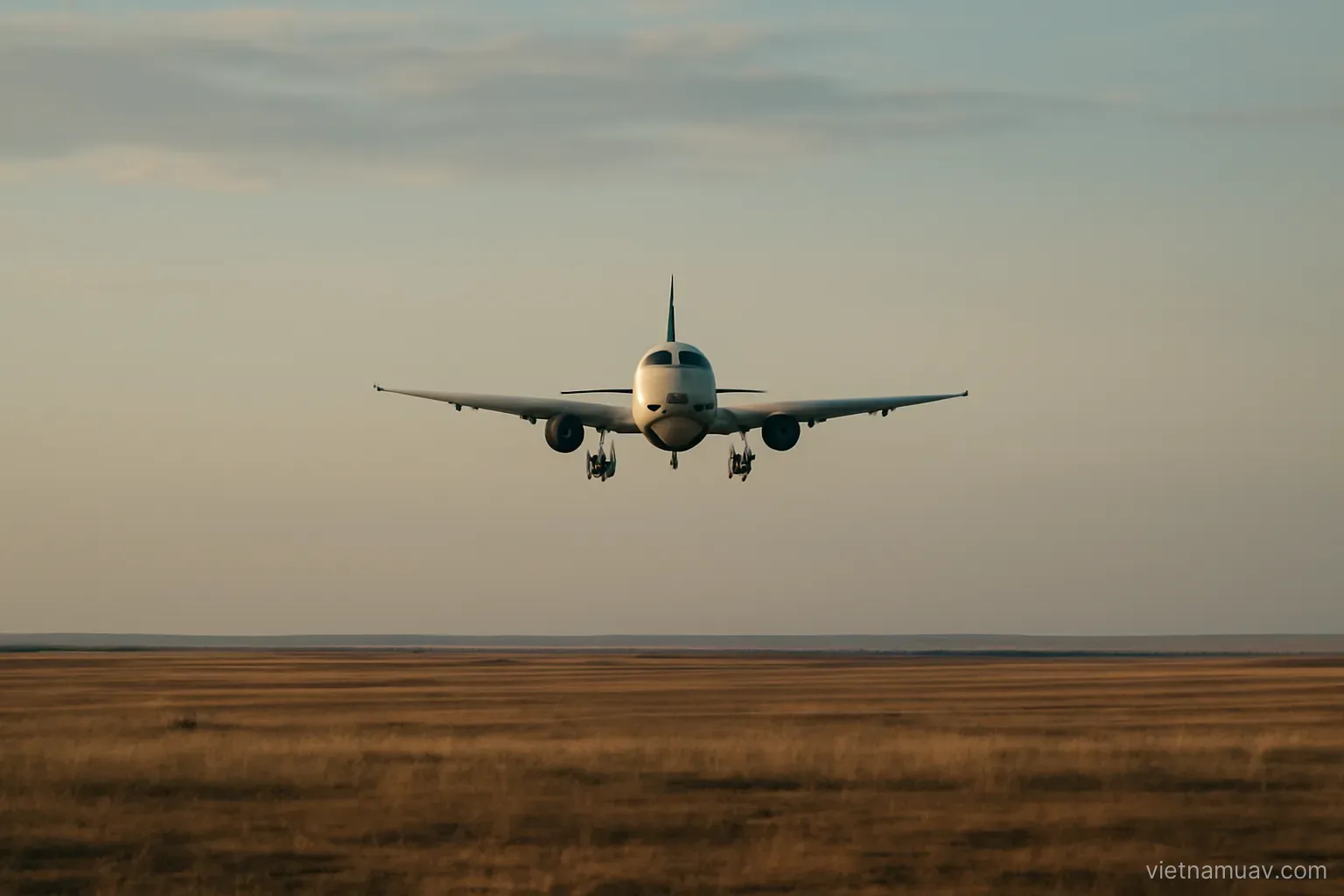
Of every risk in unmanned flight, collision with a crewed aircraft carries the most severe consequence. It is also the most completely avoidable.
Why the risk is severe
Closing speed. An aircraft on approach is moving fast. Impact energy at that speed is substantial.
Impact location matters. An engine, windscreen or control surface strike can all produce serious consequences.
The pilot cannot avoid it. A drone is too small to see in time at approach speed.
The critical phases. Takeoff and landing, when the aircraft is low and has least margin to respond.
Helicopters. Fly much lower and operate almost anywhere — medical, rescue, patrol, utility inspection. The risk is not confined to airports.
Agricultural aircraft. Operate very low over farmland in some areas, so rural airspace is not automatically clear.
Reporting obligations. A close encounter with a crewed aircraft is generally reportable, and pilots do report them. Assuming an incident went unnoticed is usually wrong.
Legal consequence. Endangering aviation is a serious offence regardless of whether a collision actually occurs.
Identifying hazardous airspace
Civil airports. Restricted zones by radius, defined in the applicable regulation.
Approach and departure paths. Aircraft fly low along the extended runway centreline for a considerable distance. The hazard area is not just a circle around the field.
Military aerodromes. Larger restrictions and stricter enforcement.
Helipads. At hospitals, tall buildings and industrial sites. Frequently overlooked and genuinely hazardous.
Regular helicopter routes. Along coastlines, powerlines and rivers. Local knowledge is the practical source.
Small airfields and informal landing sites. May not appear on any map.
How to check. Aeronautical charts, notices from the regulating authority, and enquiry with local government.
Precautionary principle. Where you are unsure whether an area is restricted, assume it is and ask.
Operating rules
Stay low. Fly at the minimum altitude the task requires. Every additional metre adds unnecessary exposure.
Keep the aircraft in sight. Visual contact allows you to see developing situations and react.
Listen. Aircraft and helicopters are heard before they are seen. This is a valuable early warning.
Land immediately when crewed aircraft are present. Do not negotiate with yourself about whether they will come close.
Use an observer. Watching and listening to the airspace while the pilot concentrates on the task.
Do not fly in cloud or poor visibility. You cannot see other aircraft and they cannot see you.
Lighting. Helps other aircraft see you, particularly at dusk.
Have a landing plan before you need it. Knowing in advance where you will put the aircraft down means the decision to land takes a second rather than half a minute of hesitation.
Notify where appropriate. For projects in areas with aviation activity, notification allows controllers to warn pilots.
Situations requiring particular care
Wildfire areas. Firefighting aircraft operate very low. A drone in that airspace forces the operation to stop, with serious downstream consequences.
Disaster zones. Rescue helicopters operate densely.
Major events. Temporary restrictions and official aviation activity.
Search and rescue operations. Discussed earlier and worth restating.
Near high-voltage transmission lines. Patrol helicopters fly the route at low level.
Agricultural regions. Crewed spraying aircraft in some locations.
The general rule. Wherever crewed aircraft may be operating low, contact the coordinating body before flying.
Always yield. A drone landing costs a few minutes. A crewed aircraft has no equivalent option.
Building the habit
Airspace check comes first. Before weather, before equipment. Put it at the top of the standard checklist.
Record what was checked. Source and date. It builds the habit and protects you.
Set a software altitude ceiling. Below the permitted limit, giving margin.
Do not disable manufacturer restrictions. They exist for a reason. Disabling them to fly somewhere blocked is a very poor decision.
Train the whole crew. Not just the pilot. The observer needs to know what to listen and look for.
Report near misses. Information about close encounters improves the system for everyone.
Educate the wider community. Recreational flyers frequently do not understand this risk. Sharing the information is a useful contribution.
Brief the client too. If they understand why you will stop flying when a helicopter appears, they will not treat it as you being difficult.
Remember the trade. No image and no dataset justifies the risk to an aircraft carrying people.
Frequently asked questions
Why is the hazard area not just a circle around an airport?
Because aircraft fly low along the extended runway centreline for a considerable distance during approach and departure, so that corridor is hazardous too.
What is the earliest warning of a crewed aircraft?
Sound. Aircraft and helicopters are heard before they are seen, which is why the observer's role includes listening as well as watching.
Why is drone activity near a wildfire especially serious?
Firefighting aircraft operate very low, and the presence of a drone forces the entire operation to stop — with consequences that spread far beyond the immediate area.
Should manufacturer flight restrictions ever be disabled?
No. They exist for a reason, and disabling them to reach a blocked area is a poor decision both operationally and legally.
More in Sensors and payloads and Agricultural UAV.