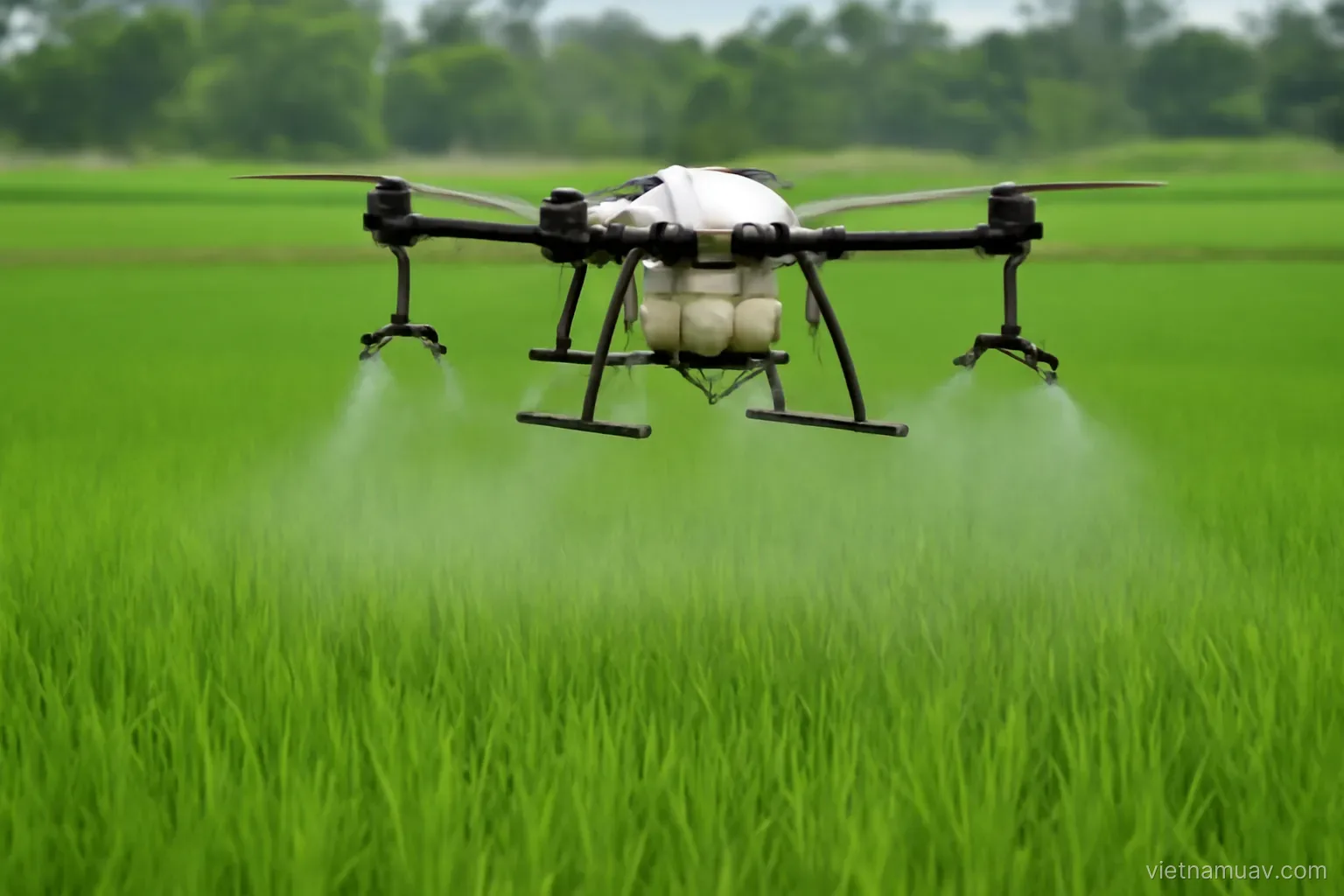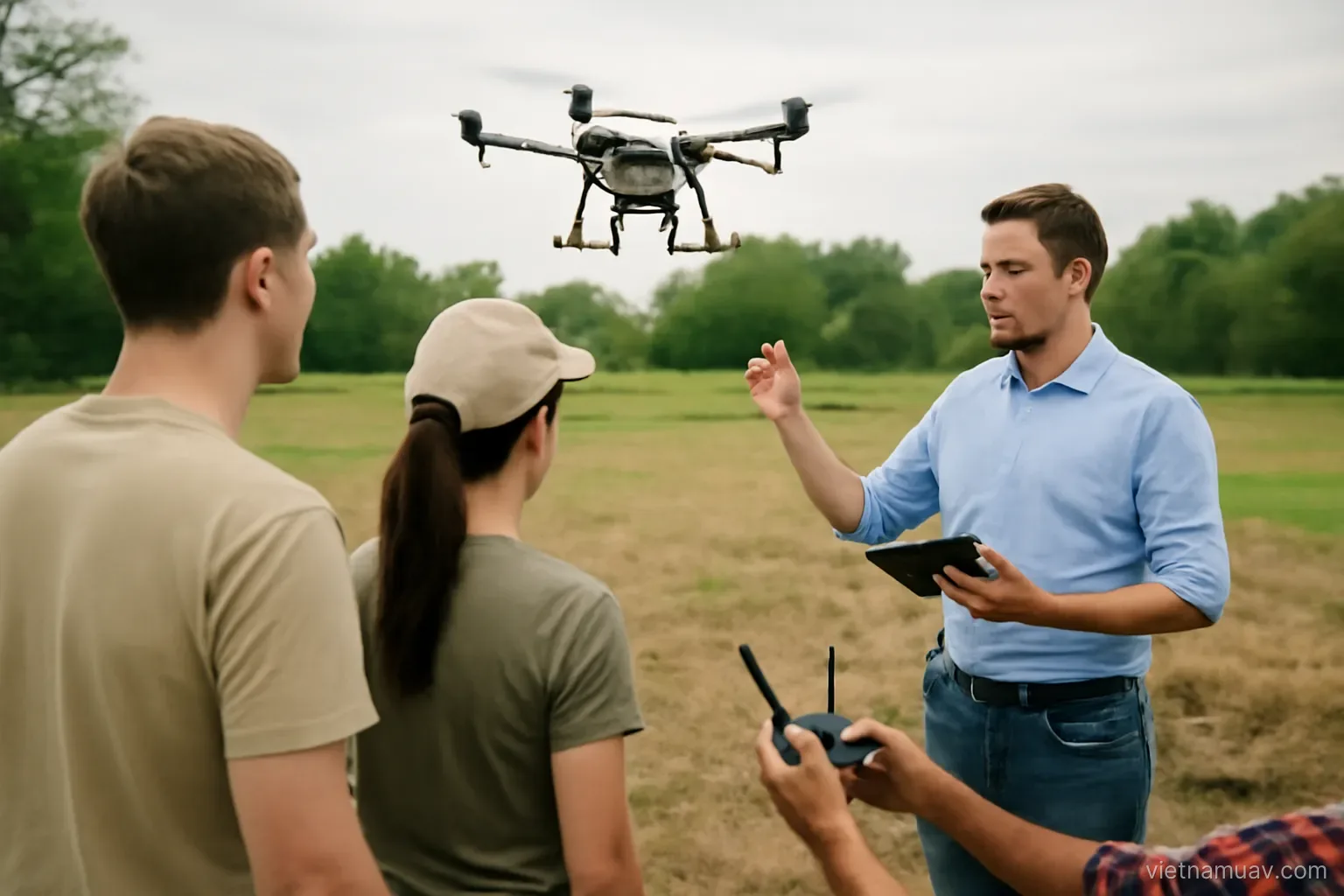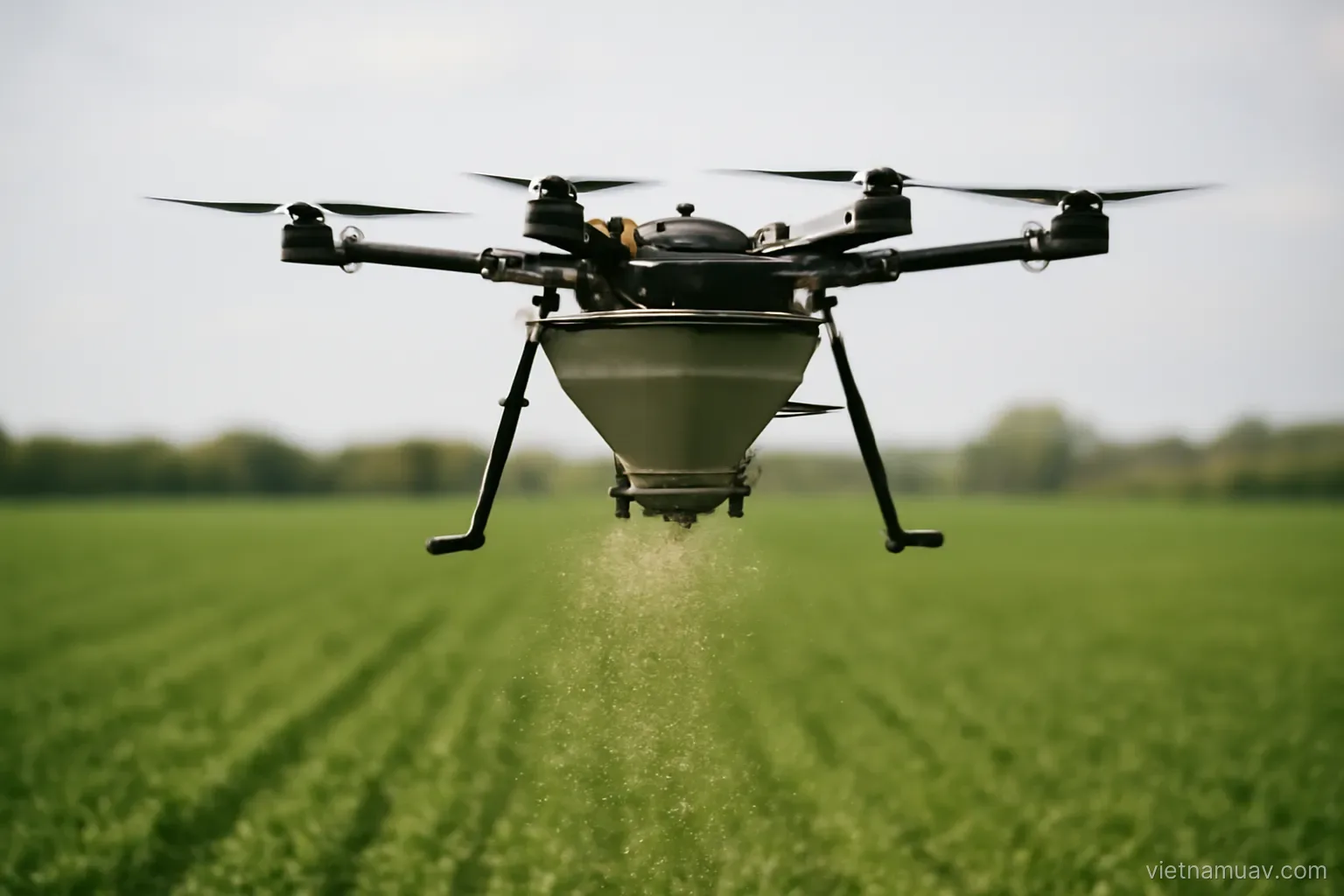
Spraying gets the attention, but spreading is expanding faster in several regions because it solves an acute labour problem within a very narrow planting window.
How spreaders work
Mechanics. A hopper, a metering mechanism controlling flow, and a spinning disc that throws material outward.
Swath width. Determined by disc speed, flight height and material properties. Considerably wider than a spray swath.
Distribution is uneven across the swath. Heavy in the centre, thin at the edges. Flight lines must overlap to compensate.
Determining the overlap. Place collection trays across the flight path, fly a pass, weigh the contents at each position. This gives the actual distribution curve.
This step is not optional. Uneven spreading produces visibly patchy fields once the crop emerges.
Material matters. Heavy granules travel further than light ones. Round uniform granules distribute more predictably than irregular material.
Moisture. Damp fertiliser clumps, blocks the metering mechanism and destabilises flow rate.
Calibrate flow. Run the mechanism for a fixed time, weigh the output, compute the actual rate. Repeat for every material.
Direct seeding of rice
The dominant application in delta regions. Replacing hand broadcasting or mechanical seeders.
Advantages. Much faster, no compaction of the paddy, and no need to mobilise many workers at once.
The real driver. The planting window is short and labour is hard to find. That, more than any technical superiority, is why growers switch.
Seed preparation. Soaked and pre-germinated to the correct moisture. Too wet and it clumps; too dry and germination suffers.
Seeding rate. Kilograms per hectare, achieved by setting flow rate against flight speed.
Flight height. Lower than for spraying, so seed does not drift. High enough to spread properly.
Field preparation matters more than the drone. Mud consistency and water level have to be right. A poorly prepared paddy gives poor results whatever the seeding method.
Check density afterwards. Count seed within a measured frame at several points and adjust for the next field.
Fertiliser application
Suitable materials. Dry granular products of uniform size. Powders and caked material will not spread.
Where it wins. Applying when the field is flooded and inaccessible, or when the crop is tall enough that walking through it causes damage.
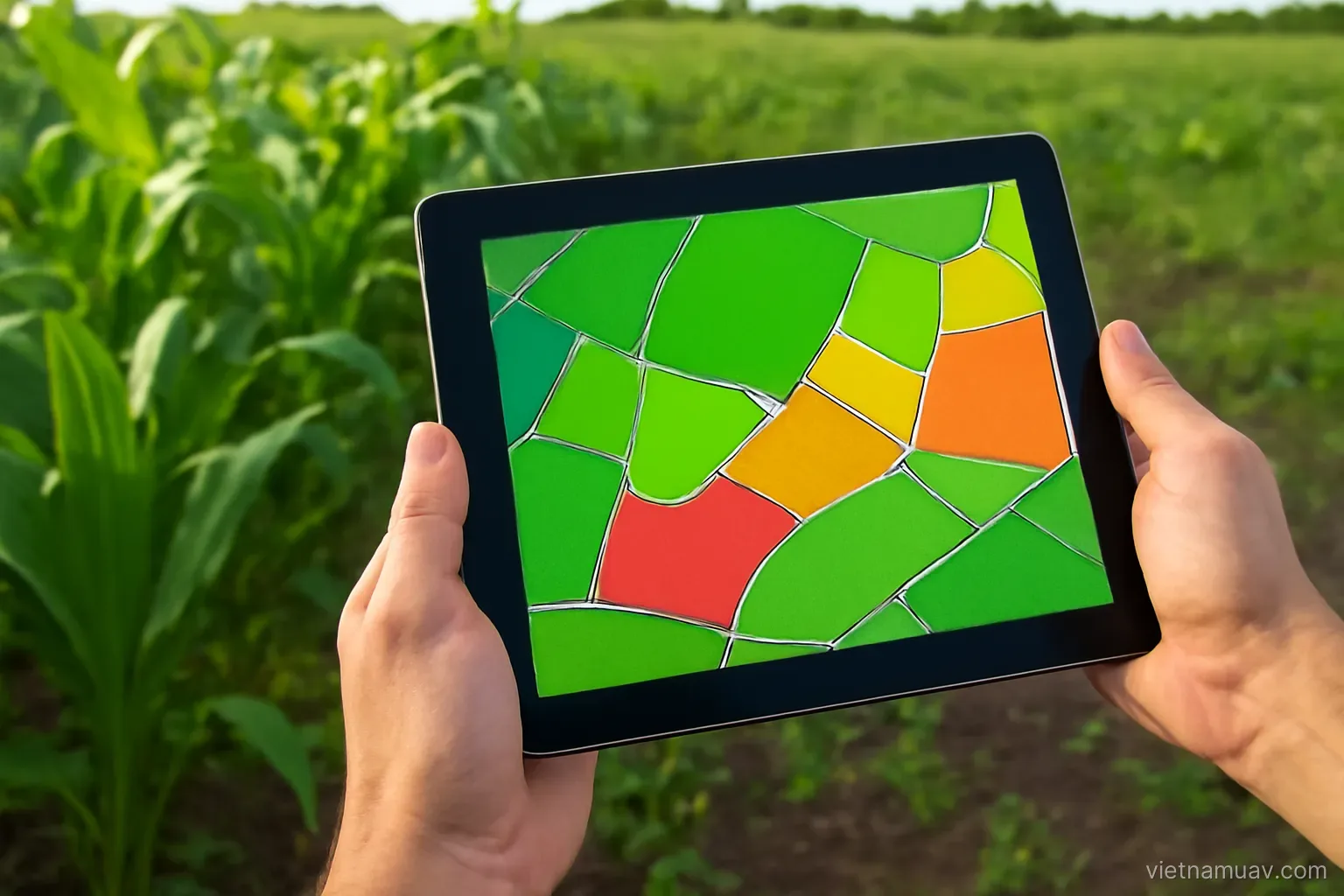
Variable rate application. If a zone map exists from an earlier survey, flow rate can be adjusted by zone — more where the crop is weaker.
This is the valuable combination. Survey, analyse, then apply according to the map. It saves input and improves uniformity.
Payload weight. Fertiliser is considerably denser than water. Check the aircraft's rated capacity rather than assuming.
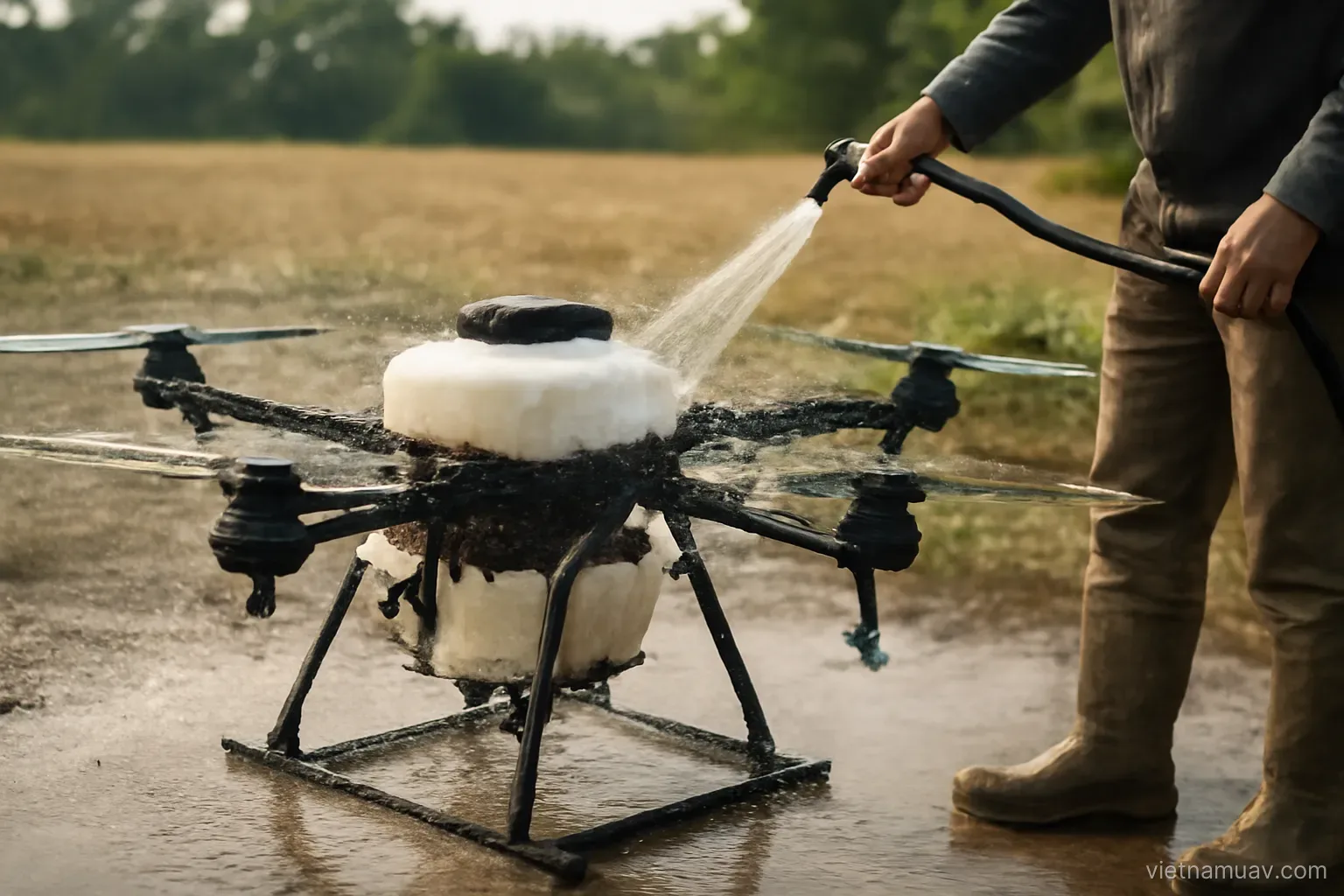
Corrosion. Fertiliser attacks metal. Thorough cleaning after every session, and periodic inspection of contact components.
Dust. Harmful to inhale. Whoever loads needs protection.
Avoid applying before heavy rain. Product washes away and contaminates watercourses.
Other spreading applications
Beneficial insect release. Distributing predator eggs or larvae. Requires a gentle mechanism that does not damage the organisms.
Why it suits drones. Even distribution across a wide area quickly. Manual release is extremely labour intensive.
Cover crop and grass seeding. On slopes or land that is difficult to access, for erosion control.
Reforestation. Broadcasting tree seed or seed pellets over large areas. Germination rates are lower than planting seedlings, but cost per hectare is far lower.
Bait application. For snail control and certain other pests.
Lime application. For soil amendment. Lime dust needs particular attention to operator safety.
What these share. Each addresses a labour or access problem rather than claiming better technical quality than existing methods.
Which is the right framing. The value of agricultural drone work lies in speed and reach, not in replacing every conventional method.
Running spreading and spraying as a service
The common model. The equipment owner takes work by area, growers pay per hectare.
Costing. Equipment depreciation, batteries, power, labour, travel, maintenance and risk. Battery depreciation is the item most often underestimated.
Batteries are the big consumable. Spraying draws heavy current, batteries degrade quickly, and replacements are expensive.
Seasonal concentration. Work arrives in a few intense weeks then stops. Costing must be annual, not based on peak days.
Liability. Who bears the cost if an application causes damage. Agree it explicitly and consider insurance.
Who mixes the product. A responsibility and safety question. Settle it in writing.
Keep records. Date, field, area, product, dose, weather. This protects you if a dispute arises.
Reputation travels. In rural areas both good and bad word spreads fast. Careful work in the first few seasons determines the following years.
Frequently asked questions
Why must spreading overlap be determined by testing?
Because distribution across the swath is heavy in the centre and thin at the edges. Collection trays across the flight path give the actual curve, and guessing produces patchy fields.
What is the real reason growers adopt drone seeding?
The planting window is short and labour is hard to find. It is a labour and timing solution rather than a claim of better agronomic quality.
What should be checked before spreading fertiliser?
That the material is dry and uniform, that the aircraft's rated payload covers the density, and that the whole system will be thoroughly cleaned afterwards because fertiliser corrodes metal.
Which cost is most often underestimated in service work?
Battery depreciation. Spraying and spreading draw heavy current, batteries degrade quickly, and replacement batteries are a significant recurring expense.
More in Flight data processing and Airspace rules and permits.