Professional flying brings paperwork. Organised well it costs minutes; organised badly every request turns into an awkward search.
What to hold
Aircraft documentation. Purchase records, technical specification, serial numbers, and registration where required.
Operator credentials. Whatever certification or authorisation applies under current rules.
Flight permissions. Per flight or per period depending on the procedure.
Client contract. Demonstrating the lawful purpose of the flight.
Insurance. Where held.
Flight log. Every sortie recorded.
Maintenance records. Evidence the aircraft is kept airworthy.
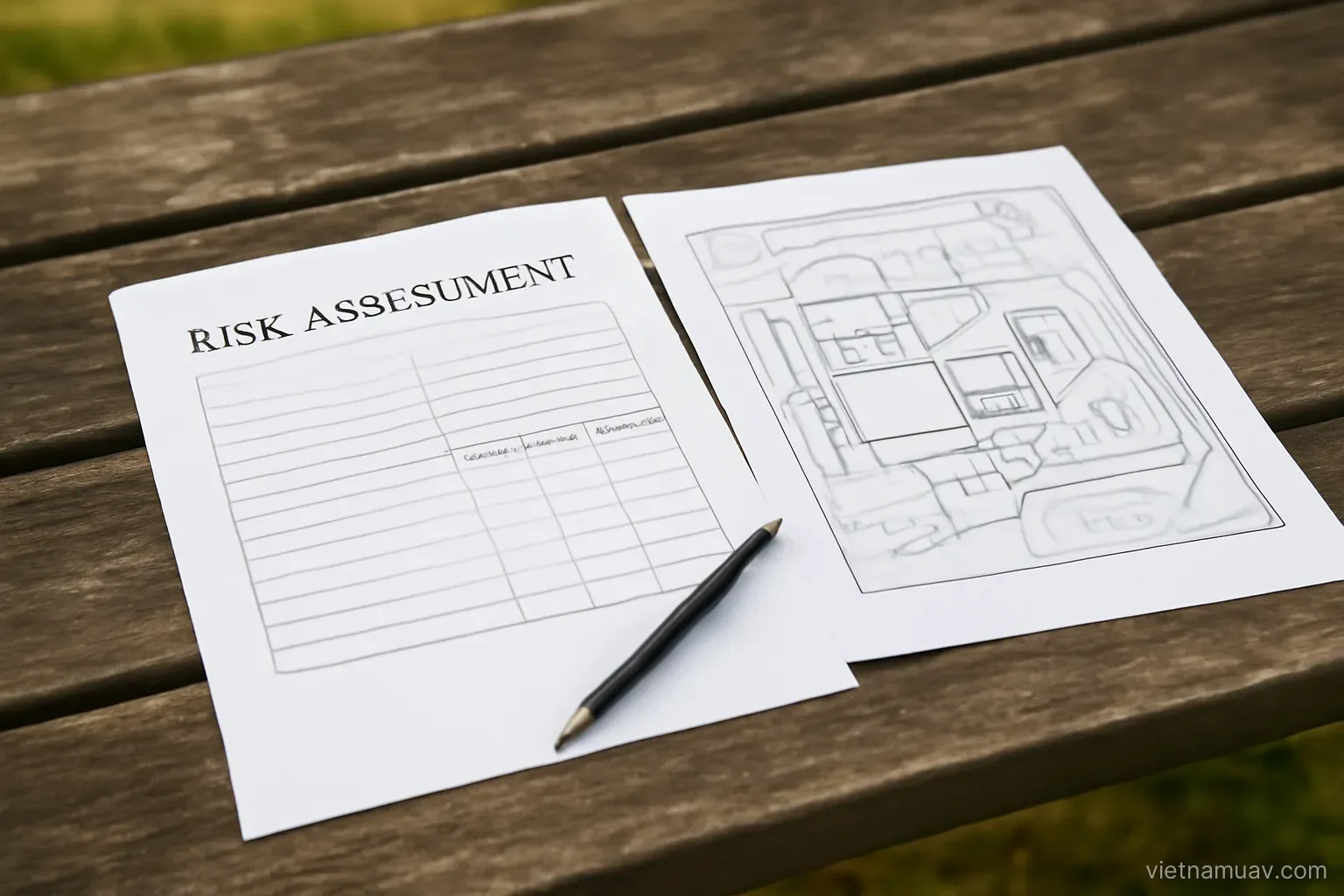
Risk assessment. For complex operations, showing the hazards were considered and mitigated.
Site-specific permissions. Landowner consent, site induction records, and any client-imposed conditions. These sit alongside regulatory permission rather than replacing it.
Correspondence. Emails granting access or approving a flight window. Informal permission that exists only as a verbal exchange is not evidence of anything.
The flight log
Contents. Date and time, location, pilot, aircraft, purpose, duration, weather, and any occurrence.
Why it matters. It evidences experience, supports investigation after an incident, and drives maintenance intervals based on flight hours.
Write it immediately. Detail fades quickly. A log completed a week later is largely fiction.
Record minor occurrences. Near misses, unusual warnings, precautionary landings. These are the early indicators.
Format is flexible. Notebook, spreadsheet or application. Consistency matters more than the medium.
Back it up. A lost log is lost evidence.
Summarise periodically. Total hours per aircraft, per pilot, per task type. Used for maintenance planning and reporting.
Log the aircraft, not just the sortie. Where a team runs several airframes, hours accumulate differently on each and maintenance intervals diverge quickly. A single combined figure hides that.
Note who else was present. Observer, client representative, landowner. If a question arises months later, knowing who was there is often the fastest route to an answer.
Use it to improve. Reviewing occurrences across several months usually reveals a pattern nobody noticed at the time.
Organising storage
Digital and printed. Printed copies to site, digital for archive and backup.
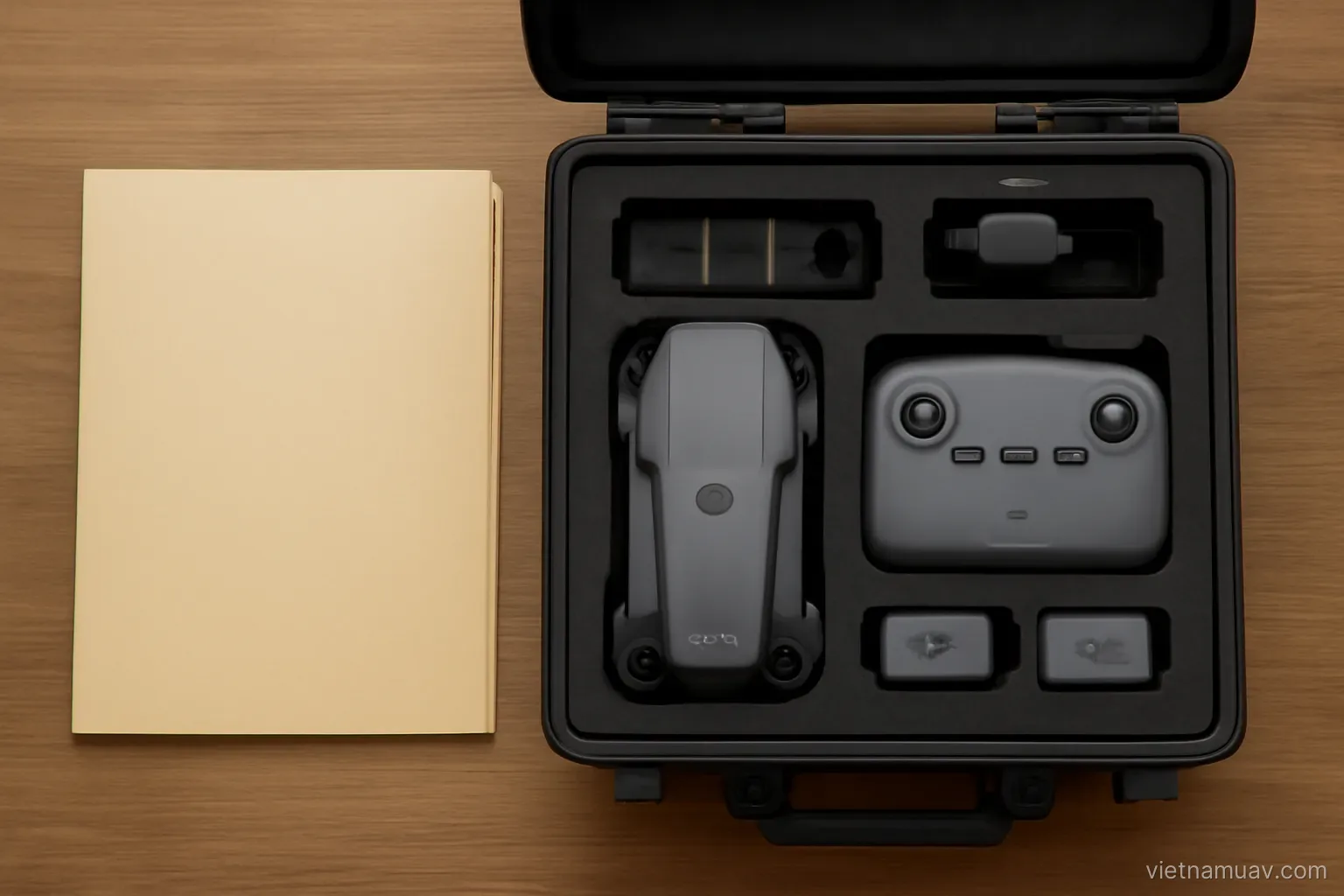
A site folder. Containing copies of everything that might be requested. It lives in the equipment case permanently.
File by project. Each with contract, permission, logs and data together.
Consistent naming. Date and project name, so items are findable months later.
Automatic backup. Not dependent on remembering.
Retention period. Following legal requirement and business need. Liability-related records are kept longer.
Access control. Records contain client information and project data. They should not be openly accessible.
Keep a single index. One list showing every aircraft, credential and policy with its expiry and where the document sits. It takes an hour to build and removes most of the searching.
Diary the expiries. Which credentials and permissions lapse when, with reminders set in advance.
When inspected
Be calm and cooperative. Officials are performing their function.
Produce documentation. Complete and ordered. It creates a good impression and shortens the encounter substantially.
Explain clearly. What you are doing, for whom, and what permission you hold.
Land when asked. Do not argue while the aircraft is airborne.
Record the encounter. Who, which body, when, and what was discussed. For your own file.
If a report is issued. Read it before signing, and note any disagreement with its contents.
If documentation is missing. Acknowledge it and ask how to rectify, rather than arguing.
Keep it brief and factual. Answer what is asked without volunteering speculation about matters you are unsure of. Guessing at a regulation you have not read helps nobody.
Learn from it. Each inspection reveals what the authorities are focused on. Adjust your preparation accordingly.
Making it an organisational habit
Assign responsibility. By name. Without an owner the task is neglected.
Pre-project checklist. Which documents are required. Follow the list.
Standard templates. Flight log, risk assessment, incident report. With a template people complete them; without one everyone improvises or nobody bothers.
Train everyone. Every pilot needs to know which documents are needed and how to log a flight.
Quarterly review. Are records complete, is anything approaching expiry.
Track regulatory change. And update the procedure when it moves.
Treat it as part of the service. Larger clients ask for evidence of compliance before award. Complete records are a commercial advantage, not merely an obligation.
Review after each project. Which document was awkward to produce, which was missing, which nobody could find. Fix it while it is fresh rather than rediscovering it next time.
Price it in. Time spent on procedure and record-keeping is a genuine cost of professional operation.
Frequently asked questions
What should a flight log contain?
Date and time, location, pilot, aircraft, purpose, duration, weather and any occurrence — including minor ones such as near misses or precautionary landings.
Why write the log immediately after flying?
Because detail fades quickly, and the log is both evidence after an incident and the basis for maintenance intervals calculated on flight hours.
What should be kept permanently in the equipment case?
A site folder containing copies of every document that might be requested. Producing complete, ordered documentation shortens any inspection substantially.
Why are complete records a commercial advantage?
Because larger clients ask for evidence of compliance before awarding work, so good record-keeping opens opportunities rather than merely satisfying an obligation.
More in Flight data processing and Operations and safety.