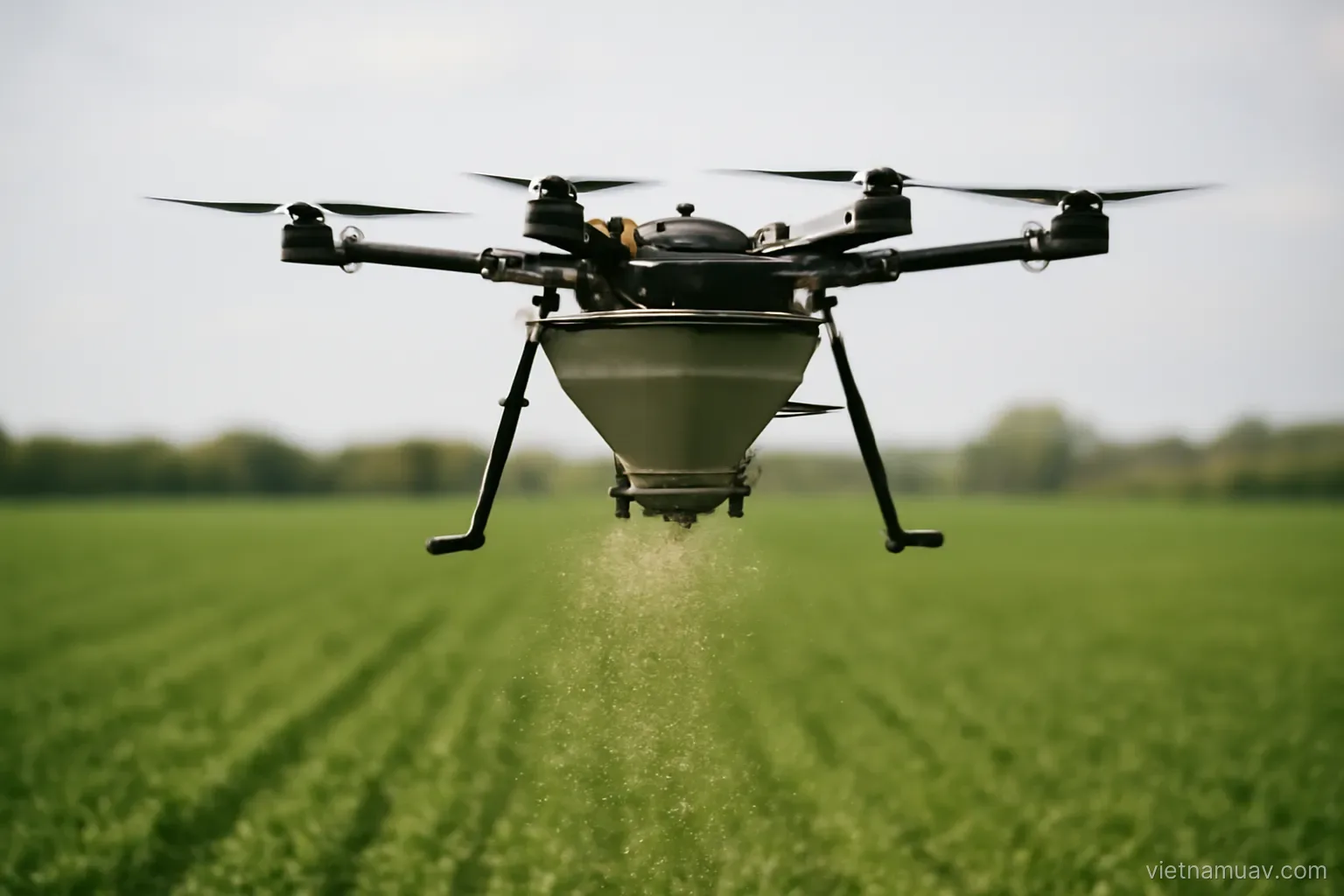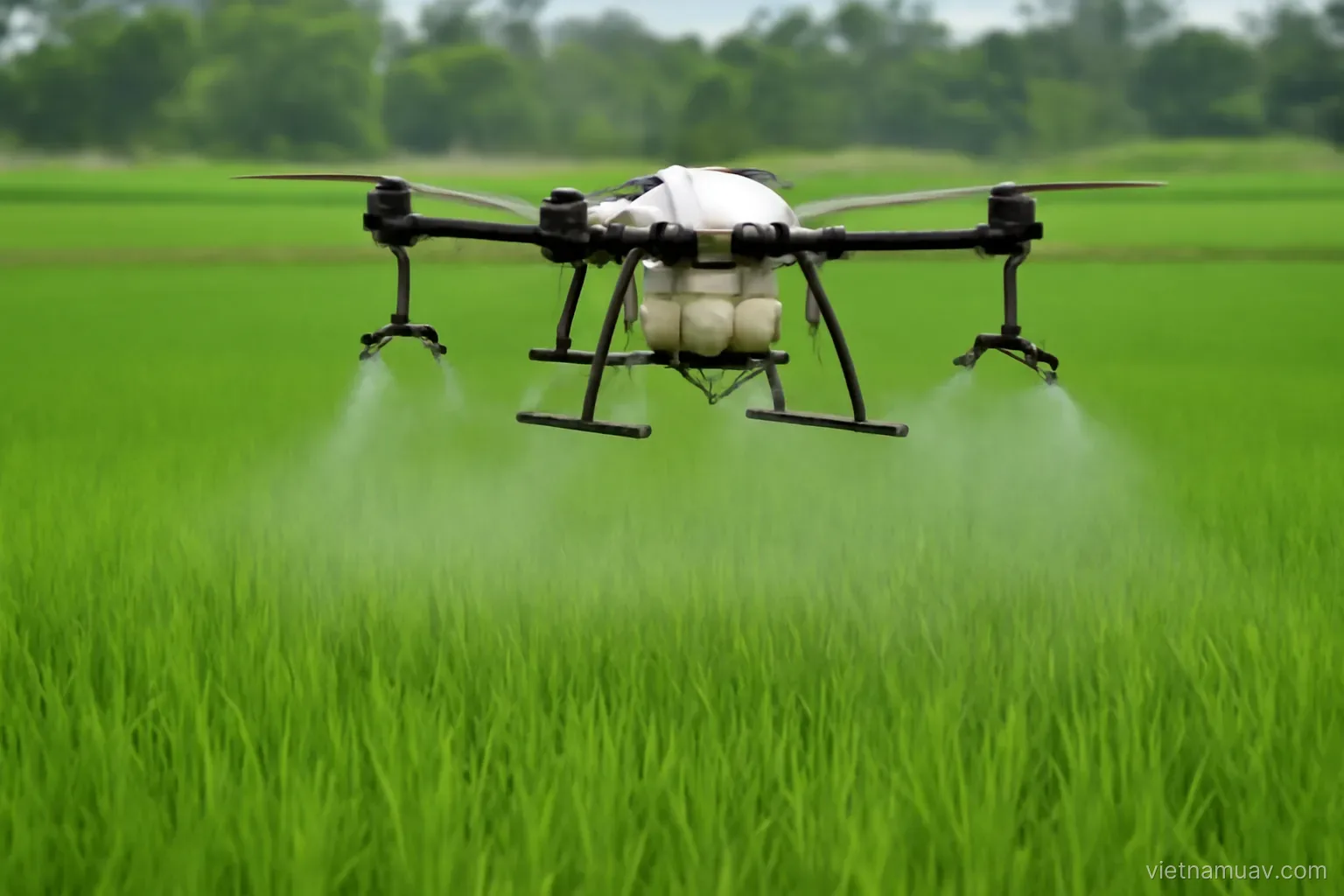
Spraying drones have become ordinary equipment across large parts of Vietnam's rice-growing regions. Spraying properly and simply getting the field covered are different things, and the difference comes down to a handful of variables.
Downwash is the defining feature
What separates a drone from other application methods. The rotor downwash drives droplets into the canopy rather than leaving them on the upper leaf surface.
Why that matters. Product reaches the underside of leaves and the lower stem, where many pests and diseases sit.
Height dependent. Fly too high and the downwash dissipates before reaching the crop. Fly too low and it flattens the plants and blows droplets sideways out of the target area.
Typical working height. One to three metres above the canopy, varying by aircraft and crop. It has to be established for each combination rather than assumed.
Nozzles. Type and number determine droplet size and lateral distribution.
Effective swath. Not the physical spacing between nozzles but the width that actually receives adequate coverage. It is narrower than most operators assume.
Measure it with water-sensitive paper. Place cards across the flight path, fly a pass, count droplet density. This is the only reliable way to know what the aircraft is actually delivering.
Rate and droplet size
Application volume. Litres per hectare. Drones apply far less water than conventional knapsack or boom spraying.
Why lower volume works. Smaller droplets and mechanical assistance from downwash. But the concentration of active ingredient in that water must rise correspondingly.
This is where most errors occur. Mixing to a familiar knapsack concentration and then applying at drone volumes results in severe underdosing.
Calculate correctly. Work in active ingredient per hectare, not concentration in the tank.
Droplet size. Fine droplets cover more evenly and adhere better but drift more and evaporate faster.
Coarse droplets. Drift less but cover less thoroughly and run off leaves more readily.
Match to product type. Contact products need thorough coverage and therefore finer droplets. Systemic products are more forgiving.
Match to conditions. Light wind and high humidity permit finer droplets. Windy or hot dry conditions require coarser ones.
Wind and drift
Drift is the largest single problem. Product carried onto neighbouring fields, houses, or fish ponds.
Consequences. Damage to third parties, disputes, and legal liability. In aquaculture areas the consequences can be severe.
Wind threshold. Above roughly three metres per second drift rises sharply. Many guidelines set the limit around there.
Very still air is also a problem. Under calm conditions with temperature inversion, fine droplets remain suspended and travel when a light breeze eventually arrives.
Best window. Early morning or late afternoon with a light steady breeze and moderate temperature.
Avoid the middle of the day. High temperature evaporates droplets before they reach the target, and convection carries them upward.
Buffer zones. Maintain distance from dwellings, watercourses and sensitive crops. The distance depends on conditions.
Notify neighbours. Adjacent growers and anyone with fish ponds nearby. It is both a responsibility and the simplest way to avoid disputes.
Field operations
Survey the field first. Power lines, poles, tall trees, graves, buildings. This step is mandatory and is the one most often skipped under time pressure.
Power lines are the primary hazard. Hard to see and at exactly the operating height. Most serious incidents involve them.
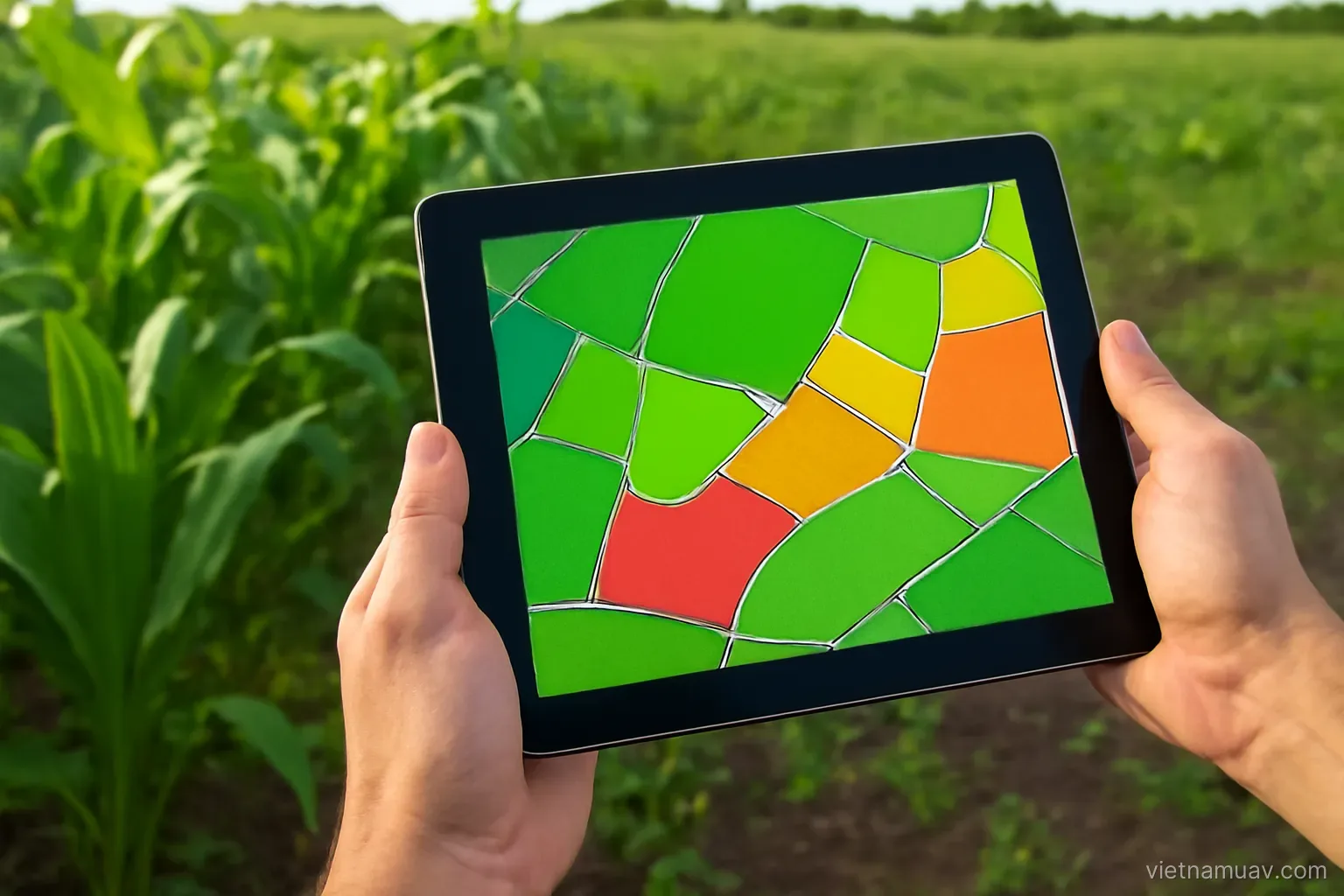
Map the boundary. By walking it with a positioning device or flying a survey pass first.
Terrain following. Terraced or uneven ground requires maintaining consistent height above the crop.
Battery logistics. Spraying draws far more power than ordinary flight. Plan for many batteries and field charging.
Mixing discipline. Mix only what each pass requires. Surplus product must be disposed of properly.
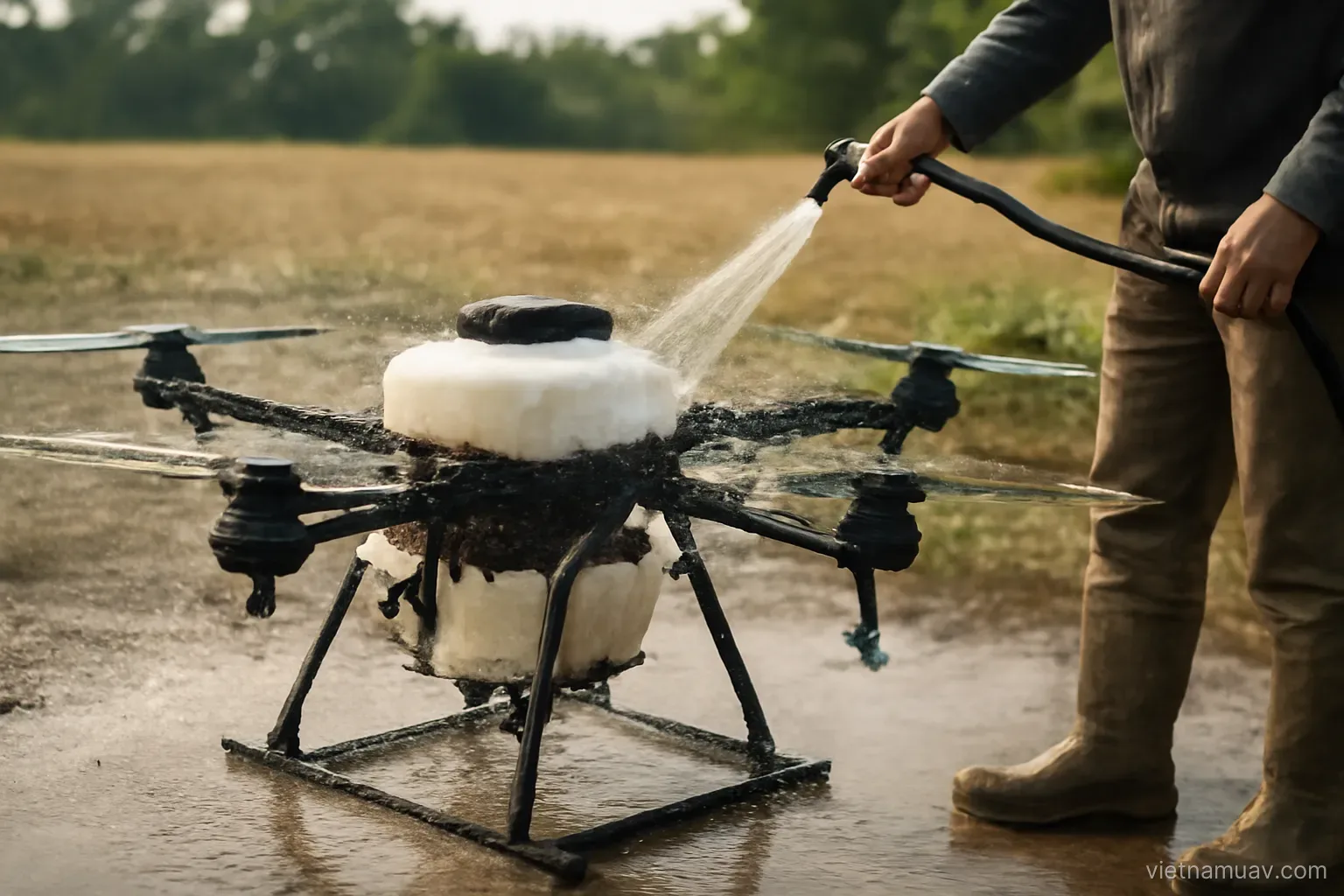
Flush after use. Immediately. Dried product blocks nozzles and corrodes components.
Operator protection. Mask, gloves, long clothing. Whoever mixes handles concentrate, and that is the greatest exposure risk in the whole operation.
Verifying the application
Water-sensitive paper. Before treating a whole field, fly a test pass over cards and check droplet density.
Check the underside. Place cards on both leaf surfaces. This is where drones have an advantage and also where poor height settings show up.
Check the edges. Field margins are usually under-treated because of turning. A perimeter pass is often needed.
Follow up after treatment. Did pest pressure fall, and how quickly. This is the measure that matters.
Compare against previous methods. If switching from knapsack, compare results to calibrate the rate.
Record the settings. Height, speed, flow rate, nozzle type, weather, product and dose. A combination that works is worth keeping.
Adjust by crop. Rice, orchard and plantation canopies differ, so settings differ.
Be honest with growers. Drones are not superior in every situation. Dense canopies needing thorough penetration may still be better served another way.
Frequently asked questions
Why does rotor downwash matter in drone spraying?
It drives droplets into the canopy rather than leaving them on upper leaf surfaces, reaching leaf undersides and lower stems where many pests sit.
What is the most dangerous mixing error?
Mixing to a familiar knapsack concentration then applying at drone volumes, which severely underdoses. Calculations must work in active ingredient per hectare.
What wind conditions are unsuitable?
Above roughly three metres per second drift rises sharply. Completely still air is also problematic, since fine droplets stay suspended and travel when a breeze later arrives.
How do you verify coverage reliably?
Water-sensitive paper placed across the flight path and on both leaf surfaces, flown as a test pass before treating the full field, with droplet density counted.
More in Survey and mapping and Flight data processing.