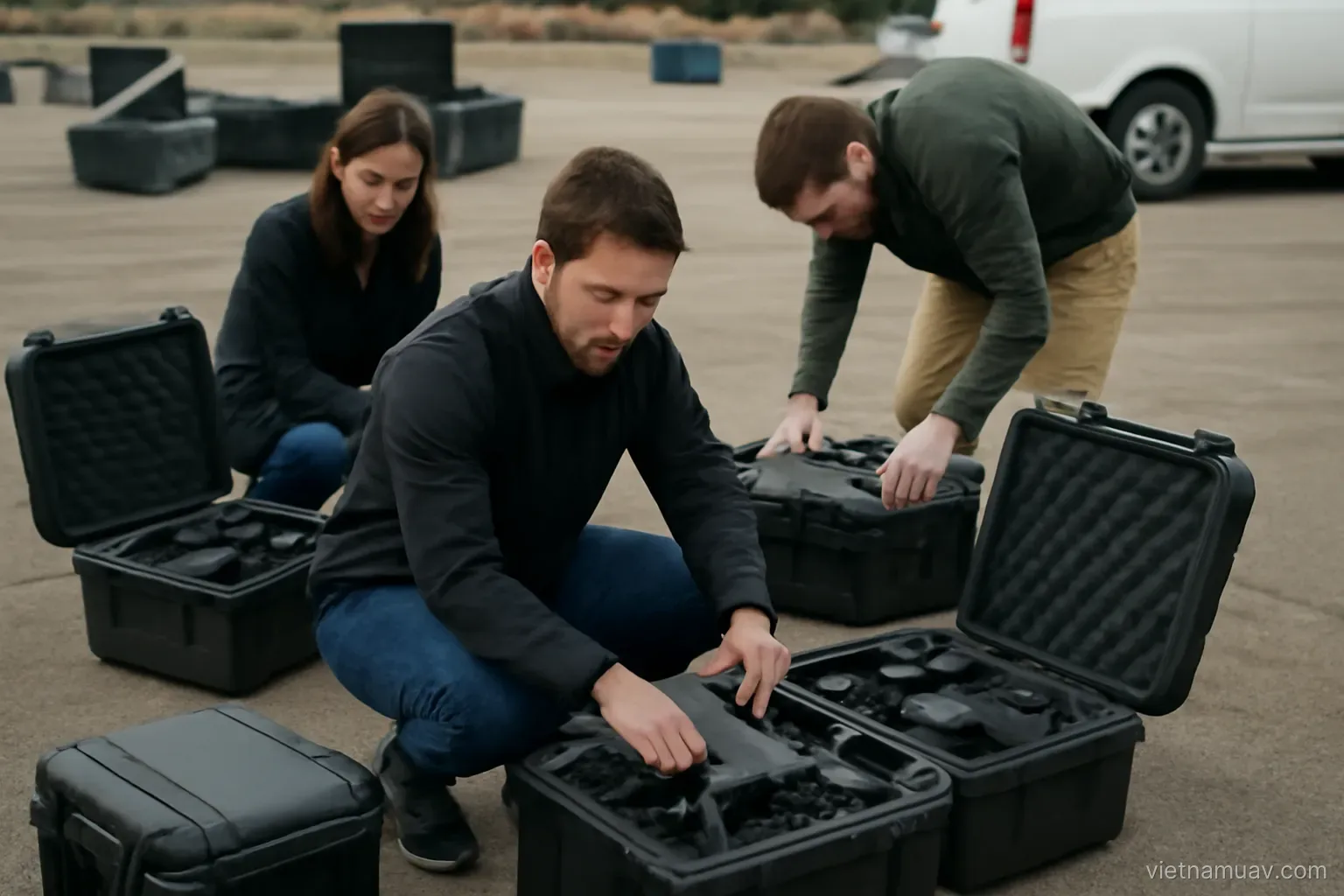
When an incident happens, a prepared team is contributing within the first hour while an unprepared one spends half a day organising itself. The difference is work done beforehand, not equipment.
Team structure
Pilots. At least two people able to fly. One means the team stops whenever that person is unavailable.
Observer. Watching the aircraft, monitoring airspace, warning about obstacles and bystanders.
Data handler. Reviewing imagery, processing, mapping, reporting. Flying without anyone reviewing the results achieves nothing.
Liaison. With incident command and other parties.
Logistics. Batteries, charging, transport, food. In a sustained operation this role matters more than it sounds.
Minimum viable team. Three people. Below that the team cannot sustain a long operation.
Rotation. Continuous flying for hours causes fatigue, and fatigue causes mistakes. Enough people to rotate is a safety requirement.
A named team leader. Making decisions, particularly the decision to stop flying.
Equipment
Two aircraft minimum. One failure mid-operation should not end the team's contribution.
Batteries. Far more than routine operations require. Plan for hours of continuous work.
Portable power. Generator or large power bank. Disaster areas lose mains power.
Spare controller.
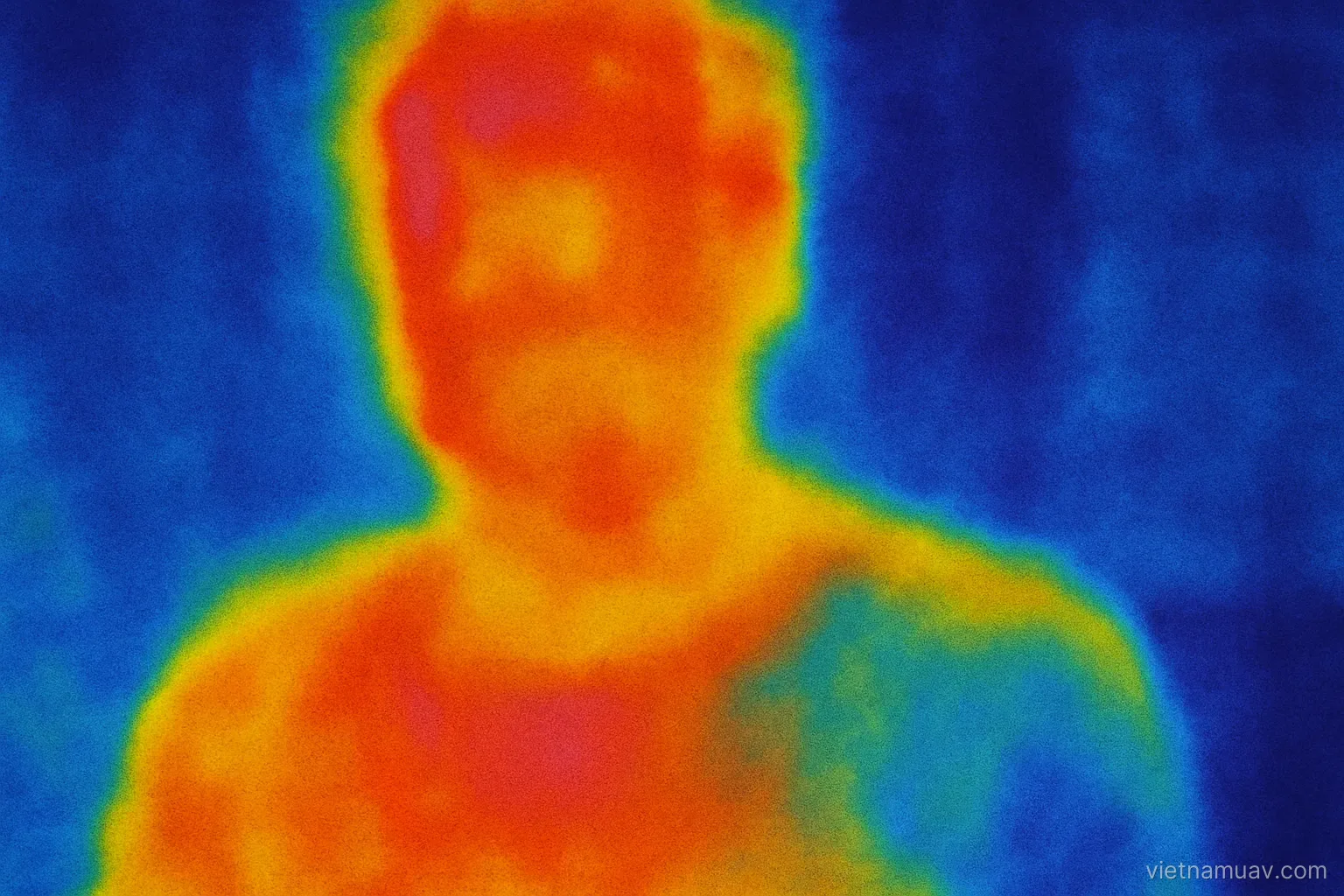
Thermal camera. If search tasking is expected. Expensive, but transformative at night.
Radio communication. Working when the mobile network is down.
Offline mapping. Downloaded in advance for high-risk areas.
Personal protective equipment. Helmet, high-visibility clothing, boots, torch, waterproofs.
Organised transport cases. Everything with a fixed place so a kit check takes minutes. Searching through a jumble during an incident wastes time that matters.
A landing mat. Dry level ground is scarce in a flooded or debris-strewn area, and launching from mud damages equipment quickly.
Inventory checks. Scheduled, not triggered by a callout.
Training
Flying in difficult conditions. Wind, darkness, terrain. Practised somewhere safe beforehand.
Manual flight. For when automation fails.
Search patterns. Rehearsed with planted targets. This establishes your team's real detection width rather than a theoretical one.
Reading thermal imagery. A learned skill. Recognising a human signature is not obvious.
Rapid data handling. From imagery to something usable within a short window.
Coordination procedure. With rescue services. Joint exercise if possible.
First aid. The team works in hazardous areas.
Regular exercises. Several times a year. Skills decay when unused, and equipment develops faults nobody notices until it is needed.
Practise the handover. Passing a finding to a ground team with an accurate position, under pressure and over radio, is a skill in its own right and it is where useful information most often gets garbled.
Debrief every time. What was slow, what was missing, what went wrong. Then change the procedure.
Working with authorities
Make contact in advance. With the local disaster management authority. Register your capability and contact details.
Why it matters. So they know who to call, and so the team can enter restricted areas.
Documentation in order. Equipment registration, operator credentials, permits where required.
Understand the command structure. Who tasks, who receives reports, how permission is obtained under emergency conditions.
Data agreement. Who owns it, who may use it, whether it may be published.
Insurance and liability. Clarified beforehand rather than after an incident.
Join local exercises. The best way to become known and to learn how the services actually work.
Never operate freelance. Uncoordinated flying in an emergency zone interferes and may be prohibited outright. Working through the proper channel gets you supported rather than obstructed.
Sustaining the team
The core difficulty. Emergencies are rare, so teams lose momentum and dissolve.
Combine with routine work. A team doing survey or commercial flying keeps its skills and its equipment current.
Fly baseline data. Surveying high-risk areas in normal conditions is both useful and a reason to keep operating.
Maintenance budget. Equipment degrades in storage, batteries especially.
Monthly equipment checks. A short test flight. Faults found now rather than during a callout.
Keep contact lists current. People change numbers, jobs and locations.
Record and share experience. After every real deployment. It is the team's asset and the wider community's.
Connect with other teams. For shared learning and for scaling up when an incident is larger than one team can handle.
Keep expectations realistic. A drone team is one small part of a response system. Doing that part well is worth more than promising beyond your capability.
Frequently asked questions
What is the minimum viable team size?
Three people — pilot, observer and data handler. Below that the team cannot sustain a long operation or rotate to avoid fatigue.
Which equipment is most often forgotten?
Portable power and offline mapping. Disaster areas lose mains power and mobile signal, so charging and online maps become unavailable exactly when needed.
Why contact authorities before an incident occurs?
So they know who to call and so the team can enter restricted areas. Freelance flying in an emergency zone interferes with the response and may be prohibited.
How do response teams stay sustainable?
By combining with routine survey or commercial work, which keeps skills sharp and equipment current between the rare occasions when an emergency actually occurs.
More in Survey and mapping and Operations and safety.